Showing posts with label Funder Advice. Show all posts

Friday, September 19, 2008

#65: Grant Writers Can't Fake Collaboration.

Katie Krueger has a great post about her stint as a grant reviewer at the Wisconsin Department of Instruction. They used an interesting process. She describes reviewing grants as the best professional development a grant writer can undertake. I can believe it!

Katie offers some clear advice about how to make life easier for the reviewer. This one caught my attention. I've not heard a reviewer comment on this before.

Secrets From a Grant Reviewer on How to Win Grants: "Include your partners in the planning of the grant application.This was a surprise to me, but it was very clear whether or not applicants had worked with the partners they listed in designing the program and writing the grant. If not, the descriptions of partners’ roles were vague.If they had included them, their specific role with a list of duties and responsibilities were in the application.This cannot be faked. Planning with partners beforehand will set you apart from other applicants."


Thanks for the insight, Katie.

Sunday, July 20, 2008

# 57: Submit an unsolicited grant proposal


Have you ever submitted an unsolicited grant proposal to the feds and had success? It's one of the strategies recommended by Cynthia M. Adams, CEO at GrantStation, in her series Understanding the Philanthropic Landscape.

GrantStation.com - GrantSeeker's Toolkit: "If you can't find a funder for your project, yet you strongly believe it should be funded, consider submitting it to a federal agency as an unsolicited proposal. This is the most difficult means of obtaining federal funds, but one that should be pursued if you think your project fits the goals and mission of a particular agency."
I haven't tried it, but it seems worthwhile if you can track down the right person to send it to. I think you'd have to balance your investment in preparing an unsolicited package with the odds that the agency will be interested. If you've been in conversation with the agency already, or have received funding from them for a related project, this might well be worthwhile.

So, does it work? Tell us your story. Please!

Saturday, August 04, 2007

# 40: Grant Writing for Scientists in Tight Times


Depressing news for scientists seeking grants -- ScienceCareers.org reports that about one in five applications to NIH get funded. If you're a new grant-seeker, one in six. And, in Europe, 97% of new science-grant-seekers will receive rejection letters.

ScienceCareers.org | Special Feature: Grant Writing for Tight Times: Kotok: 27 July 2007

So, the quality of your application clearly matters. It must stand out from the crowd. As a scientist, your livelihood depends upon it. One of the tools the article suggests is the Ro1 Tool Kit:

In The NIH R01 Tool Kit, the Science Careers Editors provide new and experienced grant writers with tips on preparing grant applications for NIH's main research funding vehicle, the R01. This article updates one of our most visited pages, first written in 2001, to reflect new procedures for electronic grant applications and what we've learned over the last 6 years. The tool kit offers pragmatic advice for improving your chances with the NIH committee, called a study section, that reviews your proposal.
I don't write science oriented grant applications, but I believe in reading every piece of funder-specific advice I can find. If I were a scientist, I'd certainly check this out.

Wednesday, June 20, 2007

#35: Speaking the Language of Grants


Kaylea Hascall at Educause Connect posted a piece recently on a grant writing course she attended. One of the things that caught her attention was the jargon. I try to avoid jargon so her list gave me pause.

How could anyone write a grant application without using most of these words? They're so integrated into RFPs and narratives that I assume everyone knows what they mean. And, of course, that's just what jargon is -- a word that has special meaning within a particular group.

So here, thanks to Kaylea, are some important terms that may be foreign to new grant writers.

"I noticed a number of terms came up again and again. Some of these are very familiar to the business world or the IT world, but they have a specific meaning in the context of dealing with funders.
capacity-building -- This is a particular category of grant, where the non-profit seeks funding which will expand their reach or make them more self-sustaining. One example of a capacity-building grant is obtaining funds for a development person who can raise money from other sources and move the organization toward being self-sustaining.

sustainability -- Once you get started, how will you continue this project or program? Will you be dependent on the funder for some time into the future? This is an important consideration for foundations in particular....

cost-sharing -- A popular term, if you can use it. Basically it means that someone else is putting up some of the money, and thus the foundation gets more bang for their buck.

dissemination -- How you will share the project with others. Will an article be published in the New York Times? Will you present results at conferences? Historically, this is of particular concern to agencies that fund basic research, but over time this is also more of a concern for foundations.

leverage -- Another popular term, if applicable. Will foundation money enable you to better use existing resources?

stewardship -- the process of taking care of a grant and its funder after the grant is made. Thank-you notes, progress reports, and invitations to view the results of the work are all appropriate. Getting a grant from a funder more than once is impossible without this.
Thanks, Kayla.

Monday, November 13, 2006

#21: Grant Writing Guidance From the Horse's Mouth


HHS' SAMHSA issues RFP after RFP. Seems like it should be easy to capture some of their funding, doesn't it? But the competition is fierce.

I'd written more than one SAMHSA grant application before I discovered this manual. What more could a grant writer want than the funder providing the skinny on just what matters to them? Here it is, straight from the horse's mouth.

You'll also find links to grant opportunities, statistics, news... a site worth visiting periodically if you provide services or write grants for the substance abuse, mental health, or prevention fields.

Developing Competitive SAMHSA Grant Applications - Table of contents: "Developing Competitive SAMHSA Grant Applications Participants Manual"

Where did that expression "straight from the horse's mouth" come from. by the way???

Sunday, November 12, 2006

# 20: Grant Resources from the White House


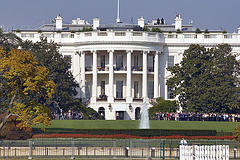
The White House has pushed faith-based initiatives. Part of that push includes a site loaded with resources designed to help faith-based and small community-based organizations find money to support the White House goals. It's worth some time, some rainy afternoon when you need a break.

And, you never know what tips you'll find. For example, it never occurred to me to ask for copies of winning applications through Freedom of Information until I read it here.

Faith-Based and Community Initiatives: Grant Opportunities: "White House Office of Faith-Based and Community Initiatives --Federal Funds for Organizations That Help Those in Need"