Monday, November 17, 2008

#67: A Checklist for Beginning a Grant Writing Assignment for a New Organization


Tara emailed me asking whether I have a form that I use when I go to see a new client. I don't. But, I jotted down a few things for her and then thought I'd share them with you, too.

When a new (to me) organization engages me to do a piece of work, here's how I get started.

Before my initial interview in person or on the phone:
  • Review the organization's 990 and website
  • Ask them to send me a packet of their PR materials, any boiler plate they have, and perhaps an earlier grant application they've submitted.
  • Do a Google search on them including news and blogs
  • Sometimes I'll review the research and best practices prior to the first meeting, sometimes later
Based on that, I usually go into the interview with a pretty good idea of the public face of the agency. Then, if the interview is for a specific grant, we discuss:
  • Project orientation - how we'll work together, who's on the team, who's the agency's lead, what tools we'll use, time table, etc.
  • What makes them want to apply for this grant? What are they currently doing makes them feel they have a good chance at receiving the funding?
  • Review the grant requirements - assume they haven't read the details
  • Walk through each section of the application and appendices discussing content, identifying what information is outstanding, determining who will get it, by when.
If they are asking for help to identify new funding opportunities we discuss
  • Current operations
  • Strategic direction
  • Previous and current funders
  • Applications submitted but not funded
  • How we'll work together
Does this sound like what you do? Do you have additions?

Thursday, October 30, 2008

#66: More Grants.Gov Resources for Grant Writers


I've had this grants.gov update in my draft folder for awhile now. Sorry I haven't published it sooner. This technical grants.gov stuff is pretty boring, but there's nothing worse than trying to find information about grants.gov in a hurry, so I push myself to read whatever they send.

By the way, if you haven't used the new Grants.gov Adobe system Federal agencies are now using, allow plenty of time ( an extra day or two) for the upload. Everything went fine as I prepared to upload the last Federal grant I did until I clicked on submit. The system went off into La-la land.

The Help Desk had to walk me through some convoluted tricks to get my application loaded. I wouldn't want to 1) try to reach them and 2) follow the directions while the clock was ticking away.

So, here are some new (well, they were new when I put them into my draft folder mid-September) Grants.gov resources.

New Troubleshooting Tips Webpage Added to Grants.gov
Grants.gov has added a troubleshooting tips page as an additional resource for applicants. The new resource concentrates on common troubleshooting issues such as verifying your Authorized Organization Representative (AOR) status, login for E-Business Point of Contact (E-Biz POC) and accessing search results. These troubleshooting tips can help you quickly resolve your technical issues. To visit the troubleshooting tips page

Subscribe to the Grants.gov Blog
Check here daily for system status, opportunity updates and new blog entries.Grants.gov Blog.
And there's a newsletter, too
The “Succeed” E-Newsletter is a guide to the latest updates, handy tips and useful articles on how to best use Grants.gov. Subscribe to the 'Succeed' E-Newsletter

I like to submit my Federal grants at night when everything is quieter. If you're inclined to do that, too, be aware that the Help Desk closes at 9 pm. When I needed help it was 8:20 pm. The person who helped me was great -- knowledgeable and pleasant. We worked steadily through the secret process (you'll never find it documented anywhere) and finished right at 9 pm.

Wednesday, October 15, 2008

Blog Action Day: Give your thanks and a check

Thank you everyone!Image by J.Starr via FlickrThis year Blog Action Day is focused on Poverty (with a capital P). As a grant writer, almost every proposal I write addresses poverty in some way. I hear the stories of poverty from the people on the front lines.

I think Blog Action Day is a fitting time to say thank you for the work my clients, and your clients, do every day to fight poverty. Sometimes it's through job training and work readiness; sometimes through food pantries. Often it's through a combination of community organizing and skill building. Helping people develop a vision for what's possible and find the tools to make it happen.

Often, the people who are fighting poverty -- agency staff -- are on the edge of poverty themselves -- just one or two paychecks away from personal financial disaster. In large part that's because our agencies squeeze so much into the proposals we write. They want to do so much with so little. Unfortunately, it also reflects how we, as a society, value the work that they do.

So, today the blogosphere is focused on poverty. Bloggers are filling the net with ideas about what you can do to fight poverty today. Write a check, feed people, educate yourself -- you can follow what's happening here. But, I'd like you to do something else, as well.

Say thank you to the people you know who do the work of fighting poverty every day. Acknowledge them. Appreciate the personal cost to them for choosing this work over other, more lucrative careers.

Oh yes, write a check for their agency, too.

If you liked this post you may want to sign up for automatic updates. You can choose the RSS feed or an email subscription at the bottom of the sidebar.


Reblog this post [with Zemanta]

Wednesday, October 01, 2008

Unraveling the Mysteries of Grant RFPs

The WriterImage via WikipediaJake Seliger has a guest post on his blog -- really a rant -- about how funders put RFPs together by committee. I thought I'd rant a bit right along side him.

Today I'm finishing up a proposal in response to a government agency-issued RFP and we still don't know whether we should be submitting a one year or two year budget. The Q&A's were posted the Thursday before the Monday-due-date -- 15 days later than their scheduled date for posting answers. They extended the deadline by four days and gave ambiguous answers to the questions.

Two of us combed this RFP to pull out what the agency expects and came up with different lists. The RFP has a section called "Requirements," another called "Expectations," another called"Instructions," and yet another called "How to..." Each adds a bit more or defines things a bit differently.

Jake says, and I couldn't agree more,
This death-by-committee effect isn’t unique to grant writing, but the combination of fear, pompousness, uncertainty, certitude and the like seems to lead to the production of especially unpalatable RFPs, and the nature of bureaucracies make potential reforms difficult to implement. In addition, RFP writers seldom have to respond to the RFPs they produce, or any other RFPs for that matter, and thus don’t understand the kinds of problems we describe.
We do the best we can. When in doubt, I choose what will make my proposal clear and readable. Read Jake's post here.
Inside the Sausage Factory and how the RFP Process leads to Confused Grant Writers: "Inside the Sausage Factory and how the RFP Process leads to Confused Grant Writers"
Reblog this post [with Zemanta]

Friday, September 19, 2008

Waukee builds a grant writing resource

Iowa state welcome signImage via WikipediaThe most difficult calls I get are from very small community groups -- very dedicated people -- looking for help with great ideas they need grants to implement. I often meet with them, give lots of free advice, and wish them well. Unfortunately, this is how I make my living -- I can't afford to give away my time and they can't afford to pay me.

A community in Iowa has come up with an interesting community service that could help -- a non-profit Grant Writers Group.
The grant-writing project got a jump-start in April when it received a $2,000 grant of its own from Community State Bank. Fourteen Waukee residents will use the money to attend two separate grant-writing classes this fall. After the classes have concluded, the group will meet regularly to create a list of projects that need money. The first grants could be finished by the end of the year. [Story link]

Update: this story has been taken off-line, but the group has a webpage here.
My impression from the brief article is that this is a community-focused group, rather than an organization-focused one. They will find the projects that need help, rather than the organizations. Great approach! (And potential competition.)
Update March 2011: the website is now gone, too. Too bad. It's a good idea. Maybe they got a few projects funded, though.

If you liked this post you may want to sign up for automatic updates. You can choose the RSS feed or an email subscription at the bottom of the sidebar.
Enhanced by Zemanta

#65: Grant Writers Can't Fake Collaboration.

Katie Krueger has a great post about her stint as a grant reviewer at the Wisconsin Department of Instruction. They used an interesting process. She describes reviewing grants as the best professional development a grant writer can undertake. I can believe it!

Katie offers some clear advice about how to make life easier for the reviewer. This one caught my attention. I've not heard a reviewer comment on this before.

Secrets From a Grant Reviewer on How to Win Grants: "Include your partners in the planning of the grant application.This was a surprise to me, but it was very clear whether or not applicants had worked with the partners they listed in designing the program and writing the grant. If not, the descriptions of partners’ roles were vague.If they had included them, their specific role with a list of duties and responsibilities were in the application.This cannot be faked. Planning with partners beforehand will set you apart from other applicants."


Thanks for the insight, Katie.

Sunday, September 14, 2008

#64: Foundation Center - Cooperating Collections

An index card in a card catalogImage via Wikipedia Did you know that any grant writer can have access to many of the Foundation Center's resources through their cooperating collections?
Foundation Center - Cooperating Collections: "Participants in the Foundation Center's Cooperating Collections network are libraries or nonprofit information centers that provide fundraising information and other funding-related technical assistance in their communities. Cooperating Collections agree to provide free public access to a basic collection of Foundation Center publications during a regular schedule of hours, offering free funding research guidance to all visitors. Many also provide a variety of services for local nonprofit organizations, using staff or volunteers to prepare special materials, organize workshops, or conduct orientations."
Check it out. There may be a location near you where you can search the Foundation Center's database for the cost of your free library card. Oh, don't let the image mislead you. The database is electronic.
If you liked this post you may want to sign up for automatic updates. You can choose the RSS feed or an email subscription at the bottom of the sidebar.
Reblog this post [with Zemanta]

Friday, August 29, 2008

#63: Sustainability -- Another Word for Long Term Survival

The Front of the SAMHSA building at 1 Choke Ch...Image via Wikipedia SAMHSA has just published a useful guide for grassroots nonprofits that as grant writers we should add to our resource file. A comprehensive RFP almost always has a question about sustainability and I often find that the team wants to answer "We'll look for another grant." -- Clearly, not what the funder is hoping to hear.

Although as grant writers we seldom carry responsibility for implementation, we should be prompting the team to think long and hard about implementation and sustainability. This toolkit addresses the full range of issues that impact survival including marketing, financial management and fundraising. It contains lots of links to on-line resources. And, of course, you can't beat the price. it's free!

Sustaining Grassroots Community-Based Programs: A Tool Kit for Community-and Faith-Based Service Providers
Reblog this post [with Zemanta]

Thursday, August 14, 2008

#62: TIPS & RESOURCES FROM GRANTORS

Here's another grant resource from Grants.gov. They've collected links to all the grant pages for many of the government agent ...your tax dollars at work! I must say, it's pretty nice to have all these links in one place.

TIPS & RESOURCES FROM GRANTORS: "TIPS & RESOURCES FROM GRANTORS
... a listing of the 26 Federal Agencies and their resources.
Simply find the agency you are interested in and click on the link to be directed to their resources."

If you liked this post you may want to sign up for automatic updates. You can choose the RSS feed or an email subscription at the bottom of the sidebar.

#61: Read the 990 before you write your grant


Here's a nifty guide for grant writers to help you understand the 990 form. I usually read the 990 for any potential client or funder. It gives me insight into the client. And, because it lists who a foundation has funded and how much they gave, it will help you choose the right places to apply and reasonable amounts to request.

How to Read the IRS Form 990 & Find Out What it Means: "The Form 990, entitled “Return of Organization Exempt From Income Tax,” is a report that must be filed each year with the Internal Revenue Service (IRS) by organizations exempt from Federal income taxes under section 501 of the Internal Revenue Code, and whose annual receipts are 'normally' more than $25,000 a year. It is an information return and not an income tax return since the organizations that file it do not pay income taxes (except, as explained below, in certain cases an organization may have to pay an “unrelated business income tax”)."
The guide is from the NonProfit Coordinating Committee of NYC -- a great resource for non-profits.

If you liked this post you may want to sign up for automatic updates. You can choose the RSS feed or an email subscription at the bottom of the sidebar.

Wednesday, August 13, 2008

#60: Determining Your Fees for Grant Writing


Because my post yesterday was prompted by a July news article about a grant writer being investigated for fraud. I decided to see whether I could find an update. What I found was quite amazing.

Jean Cross was to collect a fee of $5.175M for writing that grant application!


Now, I like money as much as the next guy, and I certainly believe that my services are worth more than I can charge my non-profit clients. Cross' contract entitled her to 15% of the grant.

But, this is public money, earmarked for after school youth development programs.

Percentage payments from public monies has long been considered unethical. Fifteen percent to the grant writer? Come on!

Lawyer: 'No criminal activity' | MyDesert.com | The Desert Sun: "Writer to get 15 percent

According to a Feb. 27, 2007, contract between Cross Resources and the task force, Cross would receive 15 percent of the grant - $5.175 million over five years - in return for her services in preparing the application and implementing the programs.

The driving force behind returning the grant, Reiss said, was concern over Cross' compensation. When Wilson and Davis became aware of Cross' 15 percent fee, the Desert Sands officials 'bullied' the task force into returning the grant with the intention of reapplying to the state without Cross' services, Reiss said."
So, my additional questions are:
  • What public or non-profit official authorized a contract with a grantwriter that included a fee of 15%?
  • What funding agency approved a grant application that included a budget item paying a grant writer 15% for writing the application? Or was that money included in the budget with some other (? fraudulent) description?
Even if she was slated to play a significant role in "implementing the program" Cross would have been wise to separate the fee for writing the grant from the implementation fees.

Whenever I can, I charge my clients a flat fee. When the amount of work is unclear or open-ended, I charge an hourly rate. If you work free-lance, how do you determine your fees?
If you liked this post you may want to sign up for automatic updates. You can choose the RSS feed or an email subscription at the bottom of the sidebar.

Tuesday, August 12, 2008

#59: Who and How are Your Grant Applications Authorized?

City of San Luis ObispoSan Luis Obispo image via WikipediaGrant writer Jean Cross is being investigated for fraud. There's not enough information in this article to determine whether this grant writer's procedures were sloppy or actually fraudulent, but it does make one pause. Two questions come to mind. (See below.)

San Luis Obispo County’s website | 07/20/2008 | Local woman target of D. A. inquiry: "The Riverside County group Cross was working for included numerous Riverside County schools as well as the area YMCA. She wrote a federal grant application on their behalf that was for programs for school-age children overseen by the Indio Youth Task Force.

According to a story published July 13 in the Palm Springs Desert Sun, Cross allegedly used 33 forged signatures on the grant application. The Task Force decided to send back the grant money because of concerns about the content of the grant application after it was awarded.

Some Task Force members contend that Cross was not authorized to use their “wet signatures,” transferable signatures sometimes used for official documents, without their knowing the contents of the application. Cross’ attorney rejects that. “Forgery is a crime that involves fraudulent intent to do something,” Reiss said. “She had no fraudulent intent to do something. She had a positive intent to do something for a lot of kids.”

“There’s no criminal activity, and that’s an accurate statement,” Reiss said. “We have been totally transparent with the Riverside District Attorney’s Office and its chief investigating officer.”

My questions:
  • When you write a grant for a coalition, do you see all the signatures on the MOU or do you trust that the lead agency has them on-file?
  • Does the person authorizing submission of your application review it or delegate the review? If they delegate, has it ever backfired on you?
Reblog this post

Monday, August 11, 2008

#58: A Service Learning Resource for Grant Writers

To what extent do participants in joint activi...Image via WikipediaYouth Service America has just published a pdf handbook Effective Practices for Engaging At-risk Youth in Service While it's specifically addresses service-learning, I think the principles are on-target for any youth program. I'll keep them in mind when I write any youth development grant.
  • Principle 1: Design an outreach strategy that includes at-risk youth.
  • Principle 2: Create a “home base” with adults who themselves have once been identified as at-risk. Many of them have “been there and done that.”
  • Principle 3: Convey a philosophy of change and both short- and long-term goals for the youth participants and the community.
  • Principle 4: Identify issues that connect to these youths’ experiences and explore the causes of each of the risk factors
  • Principle 5: Create youth and adult teams since each can learn from and contribute to the growth of others.
  • Principle 6. Build youth and adult capacity since each can serve as leaders.
  • Principle 7: Continue to provide these youth with supports to manage daily life stressors, such as family dynamics, relationships and school.
  • Principle 8: Sustain access and influence by continuing to develop links to other community organizations that can expand opportunities for meaningful participation of all youth.
The handbook is a good compendium of information and a quick read. I recommend it.
If you liked this post you may want to sign up for automatic updates. You can choose the RSS feed or an email subscription at the bottom of the sidebar.
Zemanta Pixie

Sunday, July 20, 2008

# 57: Submit an unsolicited grant proposal


Have you ever submitted an unsolicited grant proposal to the feds and had success? It's one of the strategies recommended by Cynthia M. Adams, CEO at GrantStation, in her series Understanding the Philanthropic Landscape.

GrantStation.com - GrantSeeker's Toolkit: "If you can't find a funder for your project, yet you strongly believe it should be funded, consider submitting it to a federal agency as an unsolicited proposal. This is the most difficult means of obtaining federal funds, but one that should be pursued if you think your project fits the goals and mission of a particular agency."
I haven't tried it, but it seems worthwhile if you can track down the right person to send it to. I think you'd have to balance your investment in preparing an unsolicited package with the odds that the agency will be interested. If you've been in conversation with the agency already, or have received funding from them for a related project, this might well be worthwhile.

So, does it work? Tell us your story. Please!

Sunday, June 08, 2008

#56: Evaluation Tools for Your Grant Application


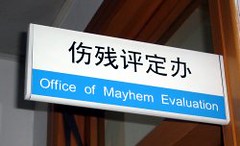
Clients often have a difficult time determining an easy, low cost, and meaningful way to evaluate the impact of their program. In fact, the evaluation process does, on occasion, devolve into mayhem! Here's a United Way website that youth development programs may find useful.

Toolfind - Youth Outcomes Measurement Tools Directory | United Way of Massachusetts Bay and Merrimack Valley: "Toolfind is a free directory designed to help professionals in youth-serving programs find measurement tools for up to 11 youth outcome areas. Your time is valuable, so we have identified 46 tools to help you get started. All tools address one or more of the outcome areas, are tested, low-cost and have few restrictions. Tools included in this database address elementary, middle and/or high school students and youth, parent, staff and teacher respondents."

Photo cropped from a photo by Xiaming

Wednesday, June 04, 2008

# 55: SMART Maps for Grant Writers

OJJDP is the grant writer's new best friend when it comes to finding and mapping data about those socio-economic factors that place kids at-risk. The site builders are gathering information from a variety of sources and making it available down to the census tract level in maps, charts, text.

About SMART
The Socioeconomic Mapping and Resource Topography (SMART) System

"The SMART System for Kids"
What is it? The SMART System is a Geographic Information System (GIS)-based issues management system, developed to support the early identification of emerging local issues and provide resources to assist decision makers with implementing both rapid response and long-term plans.

The third phase of SMART has been completed. At this time, we have archival data mapped at the national, state, county, and census tract, and place/street levels. This data is coming from multiple sources, including: the United States Census Bureau, OJJDP’s Statistical Briefing Book, the Helping America’s Youth website, and the Office of Justice Programs’ Grants Management System.

This system will allow the users to locate resources and incidents of crime and delinquency and other social indicators, visualize the data, and perform complex location-based analysis that should lead to better decision making.

Thursday, May 22, 2008

#54: How to position your grant proposal financials


Yesterday I had lunch with a fellow free-lance grant writer, Jim Kopp. I don't often have the opportunity to talk face-to-face with other grant writers, so I enjoyed the camaraderie.

At one point in our conversation, Jim commented that he often has to explain to clients the importance of presenting a project proposal within the context of the organization's overall financial picture. Some clients resist sharing their financials with funders. They forget that information is available to the world on the organization's 990 form.

So, here's a tip from Jim. The funder can look at the agency's finances anyway. Your job, as a grant writer, is to make it easy for them to see how this project fits into the big picture.

This is so important. In fact, when the Foundation Center asked the question, "How do you usually read a grant request?" here's what some of the respondents had to say:

"I look at the budget. Over the years I've learned that narrative can be enriching, but the numbers are stark and straightforward. I want to see that the money is doing the job described in the proposal." Joel Orosz W.K. Kellogg Foundation

"I skip around the document in the following way: first the budget, to see if the request is appropriate and to see the agency's financials; then the project section, to see what they want to accomplish; then the board list." Lynn Pattillo The Pittulloch Foundation, Inc.

"I often look at the budget and then read the proposal backwards." Michael Gilligan The Henry Luce Foundation, Inc.

If you're new to preparing grant budgets, the Foundation Center offers this [free] basic tutorial.

Tutorials - Proposal Proposal Budgeting Basics: "This online course is designed to help with the basics of developing a project budget, and it is geared for those who have general knowledge of proposal development.

Wednesday, May 14, 2008

#53: Say Thank You for Your Grant


Here's a tip from an excellent article. If you're a grant writer you should read the whole article, The Secret Life of Foundation Officers as told by Lee Draper, but I selected this particular tip to share. Since I'm an independent consultant, I'm not the one who gets the grant and wouldn't be the one to write the thank you. However, I'm embarrassed to say that I never had this on my list of tips to share with clients.

Thanks, Lee, for this and your other tips.

NCFY : : Publications : :The Exchange: "One other thing is, when you’re successful, write a thank-you note within 2 or 3 days. The number of nonprofits that do not thank their funders is very high. And what does that say to the donor? That says you are ungrateful. When you send a thank-you note, it makes the funder feel appreciated. They feel you care. And they will be receptive the next time you come with a new proposal. I cannot tell you how frequently I hear my colleagues who are grant makers say, “A third to half of our grantees never send a thank-you note. And they think that we’re going to fund them next year. Ha, ha, ha.” So that gets back to the fact that those are people behind the desk. And when they have helped you, it’s important to remember to thank them."
And, for my own self-interest, send your grant writer a thank you, too. It's one way of ensuring she knows you received the award. It amazes me how often people forget to let us know. And, of course, we like to be appreciated, too.

If you liked this post you may want to sign up for automatic updates. You can choose the RSS feed or an email subscription at the bottom of the sidebar.

Thursday, April 24, 2008

#52: Thirteen Proofreading Tips for Grant Writers


Thanks to Lynn Gaertner-Johnston for these tips published in her March e- newsletter. Visit her site and sign up for her newsletter.

13 Secrets of Professional Proofreaders
Proofreaders would not stay employed if they missed the errors that pass many of us by.

To be sure your message sustains your readers' confidence,
apply these "secrets" of professional proofreaders:

1. Professional proofreaders don't read straight through from beginning to end. They read each element of content separately. For example, they read the headings, check the formatting, review the headers and footers, and read the text all in separate steps.

Proof like a pro: Review each element of content separately. Even in email, review your subject line, check your attachment, test your hyperlinks, and read your message in separate, systematic steps.

2. Proofreaders check every aspect of a document: text, fonts, font sizes, page numbers, lists, titles, footnotes, illustrations, tables of contents, captions, etc. In recurring communications such as newsletters, they check everything that changes: volume numbers, dates, titles, and so on.

Proof like a pro: Remember to check everything--even boilerplate content, which may need to be updated to suit the situation. Read every slide in PowerPoint.

3. Proofreaders double-check the spelling and capitalization of all proper names.

Proof like a pro: Be sure to spell your reader's name and company name correctly. Misspelling names is one of the most common errors in email. (I will attest to that fact, as someone who is frequently called Lyn, Lynne, and Lin and whose surname is often mangled.)

4. Proofreaders confirm specific details such as people's titles, email addresses, phone numbers, and locations.

Proof like a pro: Use the Web to check addresses and titles, and test phone numbers by calling them. For speeches and presentations, do Internet searches to verify quotations and historical references.

5. For online documents, proofreaders test every link to ensure that it is live and named or described accurately.

Proof like a pro: For email, send a test message to yourself to check links and formatting.

6. Proofreaders check numbers in a separate step. They compare final numbers with original source documents such as calendars, purchase orders, price lists, price quotes, and invoices to ensure a match.

Proof like a pro: Don't assume numbers are correct. Confirm them using other sources. Make sure all numbers are current.

7. Proofreaders work in pairs when documents are highly complex or technical. One person reads aloud while the other proofreads silently.

Proof like a pro: Work in pairs when a report or proposal is crucial to your success.

8. Proofreaders read from a printed page rather than a screen. They read line by line, often using a straight edge such as a ruler or an opaque sheet of paper to help them focus on each line.

Proof like a pro: Avoid proofing solely on the screen. Print important documents and read them line by line.

9. Proofreaders read aloud when they are having trouble concentrating.

Proof like a pro: Take the time to read important messages aloud. Run your finger under the words to guard against reading words that aren't there.

10. Professional proofreaders read other people's work, reviewing it with a fresh set of eyes.

Proof like a pro: If you can't swap documents for a fresh look, at least put aside a document for a few hours or overnight. That way, you can give it a fresh reading.

11. In the absence of copyeditors and fact checkers, proofreaders take responsibility for factual accuracy. They either confirm a fact or write "Cannot confirm."

Proof like a pro: Verify dates, places, times, prices, and any other information that is available to you. If you can't verify a fact or figure, find someone who can. In a proposal, a mistyped date or misplaced decimal point can make a million dollar difference.

12. Proofreaders make and follow a list of style choices. For example, if SHUTTLE is rendered in all capital letters on page 1, proofreaders make sure the word is in all caps on pages 12 and 20.

Proof (write) like a pro: Use your software to automatically type, correct, and format words. For example, don't repeatedly type long names such as Weyerhaeuser and Fred Hutchinson Cancer Research Center. Use AutoCorrect, AutoText, and AutoFormat to render words consistently and easily.

13. Professional proofreaders keep their skills and knowledge fresh. They buy the latest style manuals and keep up with trends in language.

Proof like a pro: Include a new style manual or dictionary in your annual budget. Subscribe to online directories. If you are aware of a skill gap, fill it. If you get stuck on confusing words, get "60 Quick Word Fixes," which explains 60 challenging word pairs and provides easy memory aids.

Apply one or more of these proofreading techniques the next time you proofread an email or other communication. Then enjoy the relief and satisfaction of catching your own errors.


If you liked this post you may want to sign up for automatic updates. You can choose the RSS feed or an email subscription at the bottom of the sidebar.

Sunday, April 13, 2008

#51: Use Readability Statistics to Improve Your Grant Application


I find it hard to believe that I've offered fifty grant writing tips and I haven't included readability statistics yet. If you use WORD you'll find this an invaluable feature.

These are the statistics for a draft of a grant I was working on last week. I check on the statistics periodically, and always before I start serious editing.

Here's what these statistics tell me to look for when I'm editing:

Sentences per Paragraph 2.9 -- that's low. Low is good. It means lots of white space; separation of ideas. But, it's probably skewed by my frequent use of bullets.

Words per Sentence 17.6. TOO LONG! Well, now I know that as I edit I should look for sentences that include more than one thought.

Passive Sentences: 6% -- Good girl, Ruth! I've work hard to build the habit of writing in the active tense. I've written about that elsewhere.

Flesch Reading Ease Score: Rates text on a 100-point scale; the higher the score, the easier it is to understand the document. For most standard documents, the 'experts' aim for a score of approximately 60 to 70. Hmmm, mines only 36.1.

The formula for the Flesch Reading Ease score evaluates average sentence length (the number of words divided by the number of sentences) and average number of syllables per word (the number of syllables divided by the number of words). So, if I can reduce my sentence length by eliminating unnecessary wordiness and limiting sentences to one thought, I can probably get this score up.

Flesch - Kincaid Grade Level
-- Rates text on a U.S. school grade level. For example, a score of 8.0 means that an eighth grader can understand the document. For most documents, aim for a score of approximately 7.0 to 8.0. 12.6, my score, not good. Eighth grade can be tough a tough target for some grant applications, but I'll do what I can. This grant dealt with the court system and had significant court-related language.


How to Turn Readability Statistics on: Tools>>Options>> Spelling & Grammar>> then check 'Show readability statistics.' Once you've turned this option on, Readability Statistics display every time the spell-checker completes its review of your document.

(Note: In this same screen, you can also click settings to adjust the grammar checker to reflect your preferences regarding style and punctuation issues. OOPS! Does that count as resource #52?)


If you liked this post you may want to sign up for automatic updates. You can choose the RSS feed or an email subscription at the bottom of the sidebar.

Monday, March 17, 2008

# 50: Grant Writer! Accentuate the positive. Eliminate the Negative

You know that old song...
"Ac-cent-tchu-ate the positive. E-lim-inate the negative. Latch on to the affirmative.
Don't mess with Mr. In-between!"
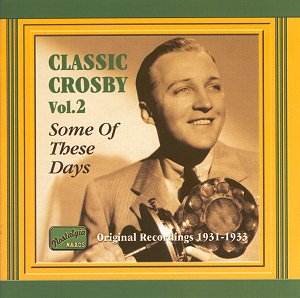
(Bing Crosby sang it. That's why his picture is here.)

Well, when we're writing about our organization's need for grant money, it's easy to focus on the negative. 'Kids are killing each other on the streets. The environment is going to hell. And, everyone in the neighborhood needs shoes.'

And, some days, the cup just seems half empty. Everything out of my mouth is negative.

But, as grant writers we know that our choice of language has a psychological impact on the reader. So, consider carefully the impact you want to have.

While a some negative language about the problem may be inevitable, leave the reader with positive feelings. I reread my text to find negative sentences and try to rewrite them as positives.
Without your funding the situation will continue to deteriorate and life will be miserable.
versus
With these additional resources the neighborhood can rise to the challenge and solve some of its problems.
Now, doesn't that feel better? Well, you know what I mean.

Sunday, March 16, 2008

#49: KIDS COUNT-- data for grant writers from the Casey Foundation


As a grant writer you probably already have the Casey Foundation bookmarked. If you don't, do it now! This site is an invaluable resource for anyone who writes about need.

KIDS COUNT: "New! KIDS COUNT Data Center
The Annie E. Casey Foundation's KIDS COUNT online database has a whole new look and feel. Now featuring child well-being measures for the 50 largest U.S. cities, this powerful tool contains more than 100 indicators, including the most recent data available on education, employment and income, poverty, health, and youth risk factors for the United States as a whole, all 50 states, the District of Columbia, Puerto Rico and the U.S. Virgin Islands."

#48: User Testing for Grant Writers

I've talked about these tips before, but it never hurts to remind ourselves that all our writing needs "user testing." The grant writer's work must turn a complex subject into understandable, jargon-free text. It requires testing before submission.

Matthew Stibbe's
advice targeted geeks writing for a general audience, but it applies to grant writers as well. From one of my favorite writers about writing:

Geeks: How to Write for a Non-Technical Audience : "Bad Language" : Thinkmap Visual Thesaurus
User testing. I recommend three kinds of testing: read the article aloud to yourself. Does it sound like you? Is it natural? Does it make sense? Ask a non-technical friend or colleague to read it and check that they picked up on the main points you wanted to convey. Finally, try to find someone who can proofread it properly- it's very hard to proofread your own work.

Thursday, March 13, 2008

#47: The Mossberg Solution - the grant writers guide to school data


A month or so ago, Walter Mossberg, a Wall Street Journal technology columnist, published a column describing three sites where parents can research schools. I use SchoolMatters.com, but you may find one of the others more to your liking. Check them all out.

The Mossberg Solution - WSJ.com: "SchoolMatters.com, a service of Standard & Poor's, is more bare-bones, containing quick statistical comparisons of schools. (S&P is a unit of McGraw-Hill Cos.) This site gets its content from various sources, including state departments of education, private research firms, the Census and National Public Education Finance Survey. This is evidenced by lists, charts and pie graphs that would make Ross Perot proud."
I especially like the fact that SchoolMatters can generate one report that pulls together data from several schools. I'm currently writing a grant application for three after school programs -- an elementary school site and two very different high schools. One report gives me the data on all three.

Here are the three sites Mossberg reviews:

Wednesday, March 12, 2008

#46: Statistics Help for Grant Writers

Here's a site to help those of us who are statistically challenged.

Statistics Help for Journalists: "Statistics Every Writer Should Know
A simple guide to understanding basic statistics, for journalists and other writers who might not know math."

#45: Can a catchy name help get a grant application funded?

Do you think a catchy name for your program that is also descriptive of the project can make a memorable first impression?

Project names can be challenging. Sometimes we just stick with the title of the RFP -- bureaucratic and boring -- and sometimes we get quite hysterical brainstorming for a name when the application deadline presses.

And, I'm always interested in whether a client sticks with the catchy name we used in the application or ends up changing it during implementation.

Nancy Friedman presented six naming strategies in a two-part article on Visual Thesaurus. A couple of them won't work well for grant applications but most will trigger some ideas.
  1. People's names - who has inspired this program? Who's the founder?
  2. Connecting two words, like CareerWorks, Facebook, Wordpress
  3. Blended, or portmanteau, names like Technorati (a blend of technology and literati) - these are tricky.
  4. Affixed words - using a prefix or suffix with a descriptive word. For example, add Bene-, Bio- or Pre- at the beginning, or -ist, -ish, -cast, -ly, -ite at the end. BeneWorks, maybe, or BeneFunds;
  5. Invented words -- like all those accounting/consulting firms and the pharmeceuticals advertised on TV -- not a good choice for our projects.
  6. Phrases like 'Habitat for Humanity' and 'Teach the People.' One client's after school program is called 'McKee After 3'
Please note, Nancy didn't add acronyms to her list. Let's avoid ACE (Achievement it Career and Education) and ACT (Assisting Children Through Transition).

If you liked this post you may want to sign up for automatic updates. You can choose the RSS feed or an email subscription at the bottom of the sidebar.

Saturday, February 02, 2008

Credentials for Grant Writers

Isaac Seliger had a recent post I agree with. What do you think?

Grant Writing Confidential —: "A manager at the Community Redevelopment Agency of the City of Los Angeles, an agency we sometimes work for, recently sent me a link to the
Grant Professionals Certification Institute (GPCI), an organization that offers “credentials” for would-be grant writers. He wanted my reaction to the idea of grant writing credentials, which I gave him immediately: they’re a waste of time."

Thursday, January 31, 2008

#44: U.S. Census Bureau Tool Kit for Grant Writers


Here's a handy guide to working with census data that you might want to bookmark.

I often forget just how much information is available and in how many different ways. And, strangely enough, it never occurred to me that they would have people available to help me find just the data I need. (Each regional office has Partnership and Data Services staff to answer our questions.) I always thought of them as the big data bank in the sky!

U.S. Census Bureau Faith Based Tool Kit: "Faith-Based and Community Initiatives Tool Kit

FINDING CENSUS DATA FOR GRANT WRITING AND COMMUNITY NEEDS ASSESSMENT

The United States Census Bureau is the leading source of quality data about our nation's people and economy. While the Census Bureau is not a funding agency, it does provide information needed for grant proposals and Federal fund distributions. This tool kit is intended to provide a simple, easy approach to obtaining Census information for grant writing and community needs assessment.

Monday, January 28, 2008

#43: Getting to the point with bullets

As a grant writer, you probably break up long pages of text with bullets. I know I do.

Anne Holland from MarketingSherpa offers two tips on writing bullets. Although her suggestions focus on pitching a product to customers, I think her tips are just as relevant to pitching a proposal to a funder.

Her tips:

1) The eye scans the beginning and the end of a list, skipping over the middle. So organize your bullet lists like this:
  • Most important point
  • Second most important point
  • Less important point
  • Less important point
  • Third most important point
2) If you put your most important (key) words in the spots below marked as “Word,” your copy is immediately more powerful.
  • Word word word word blah
  • Word word word blah blah
  • Word blah blah blah blah
  • Blah blah blah blah blah
  • Word word blah blah blah
Make those words physically different from each other. Not just different words -- make sure they begin with different letters, too.


If you liked this post you may want to sign up for automatic updates. You can choose the RSS feed or an email subscription at the bottom of the sidebar.

Tuesday, November 06, 2007

#42: Have you used NOZA?

An anonymous commenter left us a link to NOZA. Are you familiar with them? I'm not.

NOZA just announced free foundation searching. This is a site that gathers information across the internet and makes it searchable. In other words, if we had all the time in the world, we could find it, too. But, we don't. So a new business is born.

The foundation information is free. They charge for individual donor information you might want for direct mail or donor cultivation.

I spent a half-hour or so exploring the site and thinking about how it might be useful. It's a bit complicated, but probably worth testing out for a real-world search.

I'll let you know how useful I find it. If you use it, please share your experience in the comments field here.

NOZA, Inc. - World's Largest Searchable Database of Charitable Donations

Thank you, Anonymous.

Speaking of comments -- May I ask something of you folks? I know there are many lurkers out there. The stats tell all. Would you leave me a comment when you disagree, find something helpful, or have another resource that could be useful. Your comments are my reward for my time invested. Inspire me to publish more... Thanks!


Monday, November 05, 2007

#43: Evidence-Based Treatment Standards for Substance Abuse

Robert Wood Johnson Foundation has been filling my in-box lately. I guess it's fall publication time.

This time it's a new report outlining the consensus on standards for the treatment of substance abuse. If your organization provides services for people with substance abuse issues, this is a MUST ADOPT document.

Anyone who submits an application for funding that is out of step with these standards can kiss that grant goodbye. Endorsement by 365 member organizations means this is now the gold standard.

National Voluntary Consensus Standards for the Treatment of Substance Use Conditions: Evidence-Based Treatment Practices: "Building upon recommendations from a 2004 NQF workshop, this report assembles a set of detailed, fully specified, evidence-based treatment practices based on seven practices recommended at the workshop—evaluating those practices and pursuing consensus around them. The treatment practice recommendations include target outcomes and additional specifications for what a practice entails. Consistent with the priorities established, these practices are applicable across a broad range of populations (e.g., adolescents and adults), settings (e.g., primary care and substance use treatment settings), and providers (e.g., counselors and physicians). Publications"

#41: What Does This Trend Mean to Your Agency?


I've written before about the focus funders are putting on model programs. RWJF has a longstanding reputation for funding innovation, so I was surprised to receive their email announcing an RFP that will fund eight New Jersey agencies/schools to implement a particular model program -- Safe Dates.

These will be hefty awards -- $250,000 to $400,000 per organization over three years. RWJF clearly takes this issue seriously and is leaving no choice of model curriculum to the applicants.

How do your clients or the program staff you work with feel about funders dictating the curriculum you will use? Seems to me to have some inherent problems, especially if they turn the spotlight on fidelity of implementation.

I'm all for research to determine the impact of our programs. We need to know that our investment will have a high probability of positive outcomes. But, is there a balance somewhere that allows for choice based on the target population, the talents of the staff, and the context within which the program will be offered?

And, where will the resources to develop new curricula come from?

If this is the direction that funders are going in, you service providers better get busy evaluating model programs in your area of expertise and making your voices heard. Don't let this be a one-sided discussion. What do you think?

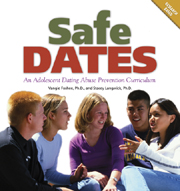
Here's a bit about Safe Dates:
Hazelden: Product Details: "Does your school's health, family life, or violence prevention curriculum address dating abuse? Given the fact that up to 38% of high school students report having been a victim of dating violence,* this is a critical issue to address in any comprehensive middle or high school violence prevention program. As the only research-based curriculum of its kind, Safe Dates helps young people recognize the difference between healthy, caring, and supportive relationships, and controlling, manipulative, and abusive dating relationships.

Highly engaging and interactive, Safe Dates gets young people thinking about:
  • how they want to be treated by a dating partner
  • how they want to treat a girlfriend or boyfriend
  • what abusive dating relationships look like
  • why dating abuse happens and its causes and consequences
  • how to tell if they are in an abusive relationship
  • what to do about feelings of anger and jealousy
  • how to help a friend who might be in an abusive relationship
Safe Dates, proven to be effective with both boys and girls, addresses perpetrators of violence as well as victims. It works as both a prevention and intervention tool, with case studies and activities that are relevant for teens who have not started dating as well"

Saturday, September 15, 2007

Grant Writing: Getting Blamed?


September brings good news and bad news in the grant writer's world. The Feds finally make all their decisions public in anticipation of their new fiscal year, October 1.

As usual, the results for applications I've written are mixed. We're all disappointed when we get a rejection, especially when we thought it was an especially good match. So, this post on Kivi Leroux Miller's blog caught my eye. Here's an excerpt and a link --

Nonprofit Communications » Blog Archive » Why I Don’t Write Grant Applications or Direct Appeals: "1) Nonprofits blame you, the grant writer, if they don’t get the funding, even if their project is really weak or they are applying to the wrong funding source. Even a beautifully written grant application can’t turn a lousy project into a winner, nor can it convince a project officer to fund you if the project is outside her area of interest."

I don't think I've ever been blamed for a grant application not getting funded. Maybe I've been lucky, but it's always seemed such a team effort that blame hasn't entered the equation.

What's your experience? Am I just lucky?
Photo by debaird

Sunday, August 05, 2007

Grant Writing Easier Than You Think?


Executive Director Lain Shakespeare at the Wren's Nest in Atlanta may have it right. What do you think?
The Wren’s Nest » Ketchum: Wren’s Nest Wins!: "I don’t want to jinx myself, but it seems like grant writing is a lot easier than professional grant writers would have you think. Actual writing talent is way overrated–personality goes a long way, and nobody can tell your story better than you.

After you identify your grant and maybe perform a little research at the Foundation Center, all you’re gonna need is three things: passion, precision, and knowledge of your audience.

The last one is most important because each grantmaker has different rules. Learning these rules is like learning your manners all over again."

Saturday, August 04, 2007

# 40: Grant Writing for Scientists in Tight Times


Depressing news for scientists seeking grants -- ScienceCareers.org reports that about one in five applications to NIH get funded. If you're a new grant-seeker, one in six. And, in Europe, 97% of new science-grant-seekers will receive rejection letters.

ScienceCareers.org | Special Feature: Grant Writing for Tight Times: Kotok: 27 July 2007

So, the quality of your application clearly matters. It must stand out from the crowd. As a scientist, your livelihood depends upon it. One of the tools the article suggests is the Ro1 Tool Kit:

In The NIH R01 Tool Kit, the Science Careers Editors provide new and experienced grant writers with tips on preparing grant applications for NIH's main research funding vehicle, the R01. This article updates one of our most visited pages, first written in 2001, to reflect new procedures for electronic grant applications and what we've learned over the last 6 years. The tool kit offers pragmatic advice for improving your chances with the NIH committee, called a study section, that reviews your proposal.
I don't write science oriented grant applications, but I believe in reading every piece of funder-specific advice I can find. If I were a scientist, I'd certainly check this out.

#39: How do you make maps for your grant applications?

Well, I've tried many mapping methods. Here's my current, and simplest method:
  • I get a google map of the area I want and choose 'Print' from the links on the right, above the map.
  • I don't actually print the map. I open "SnagIt" and take a picture. (I'll tell you about SnagIt in a minute.)
  • Then with SnagIt tools I annotate the map.
  • Finally, I save it as a jpg that I can insert into my document.
SnagIt is an invaluable screen capture and image editing utility from TechSmith. It's not free ($39.95 with a free 30 day trial), but worth every penny. I use it for everything from capturing error messages for tech support to writing instructions. And, sometimes, just to add captions to funny pictures for my friends.

You'll find a great series of SnagIt video tips at 24 in 24. Watch one or two and you'll appreciate both the tool and the SnagIt team.

What Grant Writing Books are on Your Shelf?


This news brief caught my eye.

Chronicle-Telegram » Off the Beat 07/28/07: "From the desk of Mike Kobylka…
Lorain Safety Service Director Mike Kobylka never likes to judge a book by its cover, but sometimes he thinks he should.

Sitting on the floor of his office are two books, one on top of the other. The one on the bottom is called “The Only Grant Writing Book You’ll Ever Need” while the one on top is “The Complete Book of Grant Writing.”

He bought “The Complete Book of Grant Writing” first, but said he wishes he would have taken “the only book he’ll ever need” claim at face value.

“The other one was awful, but (“The Only Grant Writing Book You’ll Ever Need”) had it all,” he said.
— Adam Wright"


What grant writing books are on your bookshelf? Which are the ones you turn to on a regular basis?

Wednesday, June 27, 2007

# 38: CDC Stats for Grant Writers


The Center for Disease Control has introduced VitalStats, a site that will let you create your own tables from the information they collect. I haven't checked how local the reporting options are, but they offer a QuickGuide to walk you through the how-to.

Their description:
"Welcome to VitalStats, a collection of vital statistics products including tables, data files, and reports that allow users to access and examine vital statistics and population data interactively.

Use our prebuilt tables and reports for quick access to statistics. Or, you can use the data files to create your own tables--choosing from over 100 variables. Using the data files takes a little more time but gives you access to more data. You can customize the tables, and create charts, graphs, and maps. You can even export the data for use offline or in another format. Please see the Getting Started Quick Guide Graphic of P D F for more information. "
I find it interesting that they also provide a QuickGuide for calculating rates and percents. I could have used both the data and the guide when I wrote a grant last month that examined teen pregnancy figures from every conceivable direction.

Book mark this site for future use.

Tuesday, June 26, 2007

#37: Writing, Briefly


Paul Graham wrote one of the best essays on writing in March of 2005. I encourage you to read it. In fact, print it out, post it on your bulliten board, and read it every time you start a new writing project.

Writing, Briefly:

(In the process of answering an email, I accidentally wrote a tiny essay about writing. I usually spend weeks on an essay. This one took 67 minutes—23 of writing, and 44 of rewriting.)"
Whether it's a grant application or a novel, Paul's advice applies.

Follow the link to Paul's site.

#36: Picture the Grant Reviewer

A reviewer at the National Institutes of Healt...Image via Wikipedia
Always write for your audience, not your client. And in the grant writing business, your audience is your review panel. Who are they? Your agencies' peers. People who research and consult in the area the grant addresses.

I write to a specific individual I picture with applications stacked up around him, late at night, eyes blurring. But here's Scott Adams' (of Dilbert fame) take on peer review. It's a bit different than mine.

The Dilbert Blog: Peer Review: "Peer Review

Peer review in science is a good thing, in the sense that it works better than any other process you can think of. But how well does it work? Dilbert Blog reader Jeff points to this link about the limits of peer review.

The article fits my preconceived notions quite well. Assuming scientists are human beings, it seems to me that most peer reviewers would fall into one of these categories:

1. Asshole
2. Biased egomaniac
3. Nice person who doesn’t want to make people feel bad
4. Too busy to put any quality thought into it
5. Person with low self-esteem who doesn’t want others to succeed in his or her field
6. Coward who doesn’t want to rock the boat

I suppose some scientists have plenty of free time, no biases, and would be happy to see colleagues succeed beyond their own careers. But seriously, how many of those scientists could there be? I don’t know any non-scientists who could fit that description."

Have you been a reviewer? Defend -- err, tell us about yourself.
Reblog this post [with Zemanta]

Fake Grant Writer Admits Fraud


Here's a news item that caught my eye in the midst of my grant writing frenzy last month. Can you believe it?

Fake Grant Writer Admits Fraud: "TALLAHASSEE, FL – A Hillsborough County woman has been sentenced to five years in prison for committing organized fraud.

Karen Kiehl pled guilty to defrauding more than 60 victims in a grant acquisition scam that ran for approximately 13 months. She was prosecuted by the Attorney General’s Office of Statewide Prosecution. An investigation conducted by the Florida Department of Law Enforcement and the Hillsborough County Sheriff’s Office revealed that Kiehl, 50, falsely promoted herself as a grant writer. She claimed she could guarantee federal and state grants for anything from medical costs to home repair costs and charged approximately one percent of the requested grant amount for her grant writing services. More than 60 victims paid Kiehl approximately $195,000, but none of the grants were written and the victims received no money from Kiehl.

Kiehl was charged with one count of organized fraud, a first-degree felony. She pleaded guilty to the charge in April and was sentenced to five years in prison to be followed by 10 years of probation. She must also make restitution to her victims. 6-04-07"
Photo by !Borghetti

Wednesday, June 20, 2007

#35: Speaking the Language of Grants


Kaylea Hascall at Educause Connect posted a piece recently on a grant writing course she attended. One of the things that caught her attention was the jargon. I try to avoid jargon so her list gave me pause.

How could anyone write a grant application without using most of these words? They're so integrated into RFPs and narratives that I assume everyone knows what they mean. And, of course, that's just what jargon is -- a word that has special meaning within a particular group.

So here, thanks to Kaylea, are some important terms that may be foreign to new grant writers.

"I noticed a number of terms came up again and again. Some of these are very familiar to the business world or the IT world, but they have a specific meaning in the context of dealing with funders.
capacity-building -- This is a particular category of grant, where the non-profit seeks funding which will expand their reach or make them more self-sustaining. One example of a capacity-building grant is obtaining funds for a development person who can raise money from other sources and move the organization toward being self-sustaining.

sustainability -- Once you get started, how will you continue this project or program? Will you be dependent on the funder for some time into the future? This is an important consideration for foundations in particular....

cost-sharing -- A popular term, if you can use it. Basically it means that someone else is putting up some of the money, and thus the foundation gets more bang for their buck.

dissemination -- How you will share the project with others. Will an article be published in the New York Times? Will you present results at conferences? Historically, this is of particular concern to agencies that fund basic research, but over time this is also more of a concern for foundations.

leverage -- Another popular term, if applicable. Will foundation money enable you to better use existing resources?

stewardship -- the process of taking care of a grant and its funder after the grant is made. Thank-you notes, progress reports, and invitations to view the results of the work are all appropriate. Getting a grant from a funder more than once is impossible without this.
Thanks, Kayla.

#34: Does Grant Writing Require Much Revision?

This morning a client called to ask me to send her a copy of a grant we wrote almost three years ago. They're renegotiating their contract with the County and the proposal has to be updated and attached to the contract. (Seems like clients keep paper copies but lose track of their digital copies -- but then, that's another posting.)

I opened the final narrative just to check and found all my revisions laid out for the world to see. Yes, I revise and revise and revise. And I didn't know then what I know now.

Always, always, always accept all changes in your document before sending it out into the world.


You don't use the Reviewing Tool Bar? Well, start now. It only take a few seconds, but it makes your work present professionally and can potentially save you embarrassment and/or protect agency secrets.

In case you need to know how here are the steps --

Select View > Tool Bars > Reviewing to open the Reviewing Tool Bar.


Then drop down the Accept Changes menu that the arrow points to. Next select Accept All Changes in Document.


If you follow these steps no one will ever know that you were going to provide the service for half the price or that you changed the funders name when you recycled the leadership biographies.

I make this my final step before saving for the last time. You should, too.