Thanks to Lynn Gaertner-Johnston for these tips published in her March e- newsletter. Visit her site and sign up for her newsletter.
13 Secrets of Professional Proofreaders
Proofreaders would not stay employed if they missed the errors that pass many of us by.
To be sure your message sustains your readers' confidence, apply these "secrets" of professional proofreaders:1. Professional proofreaders don't read straight through from beginning to end. They read each element of content separately. For example, they read the headings, check the formatting, review the headers and footers, and read the text all in separate steps.
Proof like a pro: Review each element of content separately. Even in email, review your subject line, check your attachment, test your hyperlinks, and read your message in separate, systematic steps.
2. Proofreaders check every aspect of a document: text, fonts, font sizes, page numbers, lists, titles, footnotes, illustrations, tables of contents, captions, etc. In recurring communications such as newsletters, they check everything that changes: volume numbers, dates, titles, and so on.
Proof like a pro: Remember to check everything--even boilerplate content, which may need to be updated to suit the situation. Read every slide in PowerPoint.
3. Proofreaders double-check the spelling and capitalization of all proper names.
Proof like a pro: Be sure to spell your reader's name and company name correctly. Misspelling names is one of the most common errors in email. (I will attest to that fact, as someone who is frequently called Lyn, Lynne, and Lin and whose surname is often mangled.)
4. Proofreaders confirm specific details such as people's titles, email addresses, phone numbers, and locations.
Proof like a pro: Use the Web to check addresses and titles, and test phone numbers by calling them. For speeches and presentations, do Internet searches to verify quotations and historical references.
5. For online documents, proofreaders test every link to ensure that it is live and named or described accurately.
Proof like a pro: For email, send a test message to yourself to check links and formatting.
6. Proofreaders check numbers in a separate step. They compare final numbers with original source documents such as calendars, purchase orders, price lists, price quotes, and invoices to ensure a match.
Proof like a pro: Don't assume numbers are correct. Confirm them using other sources. Make sure all numbers are current.
7. Proofreaders work in pairs when documents are highly complex or technical. One person reads aloud while the other proofreads silently.
Proof like a pro: Work in pairs when a report or proposal is crucial to your success.
8. Proofreaders read from a printed page rather than a screen. They read line by line, often using a straight edge such as a ruler or an opaque sheet of paper to help them focus on each line.
Proof like a pro: Avoid proofing solely on the screen. Print important documents and read them line by line.
9. Proofreaders read aloud when they are having trouble concentrating.
Proof like a pro: Take the time to read important messages aloud. Run your finger under the words to guard against reading words that aren't there.
10. Professional proofreaders read other people's work, reviewing it with a fresh set of eyes.
Proof like a pro: If you can't swap documents for a fresh look, at least put aside a document for a few hours or overnight. That way, you can give it a fresh reading.
11. In the absence of copyeditors and fact checkers, proofreaders take responsibility for factual accuracy. They either confirm a fact or write "Cannot confirm."
Proof like a pro: Verify dates, places, times, prices, and any other information that is available to you. If you can't verify a fact or figure, find someone who can. In a proposal, a mistyped date or misplaced decimal point can make a million dollar difference.
12. Proofreaders make and follow a list of style choices. For example, if SHUTTLE is rendered in all capital letters on page 1, proofreaders make sure the word is in all caps on pages 12 and 20.
Proof (write) like a pro: Use your software to automatically type, correct, and format words. For example, don't repeatedly type long names such as Weyerhaeuser and Fred Hutchinson Cancer Research Center. Use AutoCorrect, AutoText, and AutoFormat to render words consistently and easily.
13. Professional proofreaders keep their skills and knowledge fresh. They buy the latest style manuals and keep up with trends in language.
Proof like a pro: Include a new style manual or dictionary in your annual budget. Subscribe to online directories. If you are aware of a skill gap, fill it. If you get stuck on confusing words, get "60 Quick Word Fixes," which explains 60 challenging word pairs and provides easy memory aids.
Apply one or more of these proofreading techniques the next time you proofread an email or other communication. Then enjoy the relief and satisfaction of catching your own errors.
If you liked this post you may want to sign up for automatic updates. You can choose the RSS feed or an email subscription at the bottom of the sidebar.
Thursday, April 24, 2008
#52: Thirteen Proofreading Tips for Grant Writers
Sunday, April 13, 2008
#51: Use Readability Statistics to Improve Your Grant Application

I find it hard to believe that I've offered fifty grant writing tips and I haven't included readability statistics yet. If you use WORD you'll find this an invaluable feature.
These are the statistics for a draft of a grant I was working on last week. I check on the statistics periodically, and always before I start serious editing.
Here's what these statistics tell me to look for when I'm editing:
Sentences per Paragraph 2.9 -- that's low. Low is good. It means lots of white space; separation of ideas. But, it's probably skewed by my frequent use of bullets.
Words per Sentence 17.6. TOO LONG! Well, now I know that as I edit I should look for sentences that include more than one thought.
Passive Sentences: 6% -- Good girl, Ruth! I've work hard to build the habit of writing in the active tense. I've written about that elsewhere.
Flesch Reading Ease Score: Rates text on a 100-point scale; the higher the score, the easier it is to understand the document. For most standard documents, the 'experts' aim for a score of approximately 60 to 70. Hmmm, mines only 36.1.
The formula for the Flesch Reading Ease score evaluates average sentence length (the number of words divided by the number of sentences) and average number of syllables per word (the number of syllables divided by the number of words). So, if I can reduce my sentence length by eliminating unnecessary wordiness and limiting sentences to one thought, I can probably get this score up.
Flesch - Kincaid Grade Level -- Rates text on a U.S. school grade level. For example, a score of 8.0 means that an eighth grader can understand the document. For most documents, aim for a score of approximately 7.0 to 8.0. 12.6, my score, not good. Eighth grade can be tough a tough target for some grant applications, but I'll do what I can. This grant dealt with the court system and had significant court-related language.
How to Turn Readability Statistics on: Tools>>Options>> Spelling & Grammar>> then check 'Show readability statistics.' Once you've turned this option on, Readability Statistics display every time the spell-checker completes its review of your document.
(Note: In this same screen, you can also click settings to adjust the grammar checker to reflect your preferences regarding style and punctuation issues. OOPS! Does that count as resource #52?)
If you liked this post you may want to sign up for automatic updates. You can choose the RSS feed or an email subscription at the bottom of the sidebar.
Monday, March 17, 2008
# 50: Grant Writer! Accentuate the positive. Eliminate the Negative
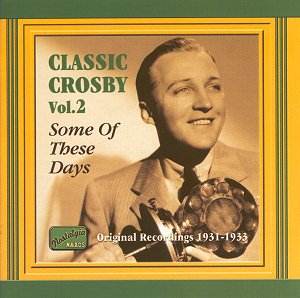
"Ac-cent-tchu-ate the positive. E-lim-inate the negative. Latch on to the affirmative.(Bing Crosby sang it. That's why his picture is here.)
Don't mess with Mr. In-between!"
Well, when we're writing about our organization's need for grant money, it's easy to focus on the negative. 'Kids are killing each other on the streets. The environment is going to hell. And, everyone in the neighborhood needs shoes.'
And, some days, the cup just seems half empty. Everything out of my mouth is negative.
But, as grant writers we know that our choice of language has a psychological impact on the reader. So, consider carefully the impact you want to have.
While a some negative language about the problem may be inevitable, leave the reader with positive feelings. I reread my text to find negative sentences and try to rewrite them as positives.
Without your funding the situation will continue to deteriorate and life will be miserable.Now, doesn't that feel better? Well, you know what I mean.
versus
With these additional resources the neighborhood can rise to the challenge and solve some of its problems.
Sunday, March 16, 2008
#49: KIDS COUNT-- data for grant writers from the Casey Foundation
As a grant writer you probably already have the Casey Foundation bookmarked. If you don't, do it now! This site is an invaluable resource for anyone who writes about need.
KIDS COUNT: "New! KIDS COUNT Data Center
The Annie E. Casey Foundation's KIDS COUNT online database has a whole new look and feel. Now featuring child well-being measures for the 50 largest U.S. cities, this powerful tool contains more than 100 indicators, including the most recent data available on education, employment and income, poverty, health, and youth risk factors for the United States as a whole, all 50 states, the District of Columbia, Puerto Rico and the U.S. Virgin Islands."
#48: User Testing for Grant Writers
Matthew Stibbe's advice targeted geeks writing for a general audience, but it applies to grant writers as well. From one of my favorite writers about writing:
Geeks: How to Write for a Non-Technical Audience : "Bad Language" : Thinkmap Visual Thesaurus
User testing. I recommend three kinds of testing: read the article aloud to yourself. Does it sound like you? Is it natural? Does it make sense? Ask a non-technical friend or colleague to read it and check that they picked up on the main points you wanted to convey. Finally, try to find someone who can proofread it properly- it's very hard to proofread your own work.
Thursday, March 13, 2008
#47: The Mossberg Solution - the grant writers guide to school data
A month or so ago, Walter Mossberg, a Wall Street Journal technology columnist, published a column describing three sites where parents can research schools. I use SchoolMatters.com, but you may find one of the others more to your liking. Check them all out.
The Mossberg Solution - WSJ.com: "SchoolMatters.com, a service of Standard & Poor's, is more bare-bones, containing quick statistical comparisons of schools. (S&P is a unit of McGraw-Hill Cos.) This site gets its content from various sources, including state departments of education, private research firms, the Census and National Public Education Finance Survey. This is evidenced by lists, charts and pie graphs that would make Ross Perot proud."I especially like the fact that SchoolMatters can generate one report that pulls together data from several schools. I'm currently writing a grant application for three after school programs -- an elementary school site and two very different high schools. One report gives me the data on all three.
Here are the three sites Mossberg reviews:
Wednesday, March 12, 2008
#46: Statistics Help for Grant Writers
Statistics Help for Journalists: "Statistics Every Writer Should Know
A simple guide to understanding basic statistics, for journalists and other writers who might not know math."
#45: Can a catchy name help get a grant application funded?
Do you think a catchy name for your program that is also descriptive of the project can make a memorable first impression?
Project names can be challenging. Sometimes we just stick with the title of the RFP -- bureaucratic and boring -- and sometimes we get quite hysterical brainstorming for a name when the application deadline presses.
And, I'm always interested in whether a client sticks with the catchy name we used in the application or ends up changing it during implementation.
Nancy Friedman presented six naming strategies in a two-part article on Visual Thesaurus. A couple of them won't work well for grant applications but most will trigger some ideas.Please note, Nancy didn't add acronyms to her list. Let's avoid ACE (Achievement it Career and Education) and ACT (Assisting Children Through Transition).
- People's names - who has inspired this program? Who's the founder?
- Connecting two words, like CareerWorks, Facebook, Wordpress
- Blended, or portmanteau, names like Technorati (a blend of technology and literati) - these are tricky.
- Affixed words - using a prefix or suffix with a descriptive word. For example, add Bene-, Bio- or Pre- at the beginning, or -ist, -ish, -cast, -ly, -ite at the end. BeneWorks, maybe, or BeneFunds;
- Invented words -- like all those accounting/consulting firms and the pharmeceuticals advertised on TV -- not a good choice for our projects.
- Phrases like 'Habitat for Humanity' and 'Teach the People.' One client's after school program is called 'McKee After 3'
If you liked this post you may want to sign up for automatic updates. You can choose the RSS feed or an email subscription at the bottom of the sidebar.
Saturday, February 02, 2008
Credentials for Grant Writers
Grant Writing Confidential —: "A manager at the Community Redevelopment Agency of the City of Los Angeles, an agency we sometimes work for, recently sent me a link to the
Grant Professionals Certification Institute (GPCI), an organization that offers “credentials” for would-be grant writers. He wanted my reaction to the idea of grant writing credentials, which I gave him immediately: they’re a waste of time."
Thursday, January 31, 2008
#44: U.S. Census Bureau Tool Kit for Grant Writers
Here's a handy guide to working with census data that you might want to bookmark.
I often forget just how much information is available and in how many different ways. And, strangely enough, it never occurred to me that they would have people available to help me find just the data I need. (Each regional office has Partnership and Data Services staff to answer our questions.) I always thought of them as the big data bank in the sky!
U.S. Census Bureau Faith Based Tool Kit: "Faith-Based and Community Initiatives Tool Kit
FINDING CENSUS DATA FOR GRANT WRITING AND COMMUNITY NEEDS ASSESSMENT
The United States Census Bureau is the leading source of quality data about our nation's people and economy. While the Census Bureau is not a funding agency, it does provide information needed for grant proposals and Federal fund distributions. This tool kit is intended to provide a simple, easy approach to obtaining Census information for grant writing and community needs assessment.
Monday, January 28, 2008
#43: Getting to the point with bullets
Anne Holland from MarketingSherpa offers two tips on writing bullets. Although her suggestions focus on pitching a product to customers, I think her tips are just as relevant to pitching a proposal to a funder.
Her tips:
1) The eye scans the beginning and the end of a list, skipping over the middle. So organize your bullet lists like this:
- Most important point
- Second most important point
- Less important point
- Third most important point
- Word word word word blah
- Word word word blah blah
- Word blah blah blah blah
- Blah blah blah blah blah
- Word word blah blah blah
If you liked this post you may want to sign up for automatic updates. You can choose the RSS feed or an email subscription at the bottom of the sidebar.
Tuesday, November 06, 2007
#42: Have you used NOZA?
NOZA just announced free foundation searching. This is a site that gathers information across the internet and makes it searchable. In other words, if we had all the time in the world, we could find it, too. But, we don't. So a new business is born.
The foundation information is free. They charge for individual donor information you might want for direct mail or donor cultivation.
I spent a half-hour or so exploring the site and thinking about how it might be useful. It's a bit complicated, but probably worth testing out for a real-world search.
I'll let you know how useful I find it. If you use it, please share your experience in the comments field here.
NOZA, Inc. - World's Largest Searchable Database of Charitable Donations
Thank you, Anonymous.
Speaking of comments -- May I ask something of you folks? I know there are many lurkers out there. The stats tell all. Would you leave me a comment when you disagree, find something helpful, or have another resource that could be useful. Your comments are my reward for my time invested. Inspire me to publish more... Thanks!
Monday, November 05, 2007
#43: Evidence-Based Treatment Standards for Substance Abuse
This time it's a new report outlining the consensus on standards for the treatment of substance abuse. If your organization provides services for people with substance abuse issues, this is a MUST ADOPT document.
Anyone who submits an application for funding that is out of step with these standards can kiss that grant goodbye. Endorsement by 365 member organizations means this is now the gold standard.
National Voluntary Consensus Standards for the Treatment of Substance Use Conditions: Evidence-Based Treatment Practices: "Building upon recommendations from a 2004 NQF workshop, this report assembles a set of detailed, fully specified, evidence-based treatment practices based on seven practices recommended at the workshop—evaluating those practices and pursuing consensus around them. The treatment practice recommendations include target outcomes and additional specifications for what a practice entails. Consistent with the priorities established, these practices are applicable across a broad range of populations (e.g., adolescents and adults), settings (e.g., primary care and substance use treatment settings), and providers (e.g., counselors and physicians). Publications"
#41: What Does This Trend Mean to Your Agency?
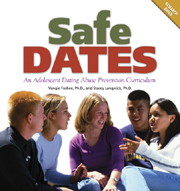
I've written before about the focus funders are putting on model programs. RWJF has a longstanding reputation for funding innovation, so I was surprised to receive their email announcing an RFP that will fund eight New Jersey agencies/schools to implement a particular model program -- Safe Dates.
These will be hefty awards -- $250,000 to $400,000 per organization over three years. RWJF clearly takes this issue seriously and is leaving no choice of model curriculum to the applicants.
How do your clients or the program staff you work with feel about funders dictating the curriculum you will use? Seems to me to have some inherent problems, especially if they turn the spotlight on fidelity of implementation.
I'm all for research to determine the impact of our programs. We need to know that our investment will have a high probability of positive outcomes. But, is there a balance somewhere that allows for choice based on the target population, the talents of the staff, and the context within which the program will be offered?
And, where will the resources to develop new curricula come from?
If this is the direction that funders are going in, you service providers better get busy evaluating model programs in your area of expertise and making your voices heard. Don't let this be a one-sided discussion. What do you think?
Here's a bit about Safe Dates:
Hazelden: Product Details: "Does your school's health, family life, or violence prevention curriculum address dating abuse? Given the fact that up to 38% of high school students report having been a victim of dating violence,* this is a critical issue to address in any comprehensive middle or high school violence prevention program. As the only research-based curriculum of its kind, Safe Dates helps young people recognize the difference between healthy, caring, and supportive relationships, and controlling, manipulative, and abusive dating relationships.
Highly engaging and interactive, Safe Dates gets young people thinking about:Safe Dates, proven to be effective with both boys and girls, addresses perpetrators of violence as well as victims. It works as both a prevention and intervention tool, with case studies and activities that are relevant for teens who have not started dating as well"
- how they want to be treated by a dating partner
- how they want to treat a girlfriend or boyfriend
- what abusive dating relationships look like
- why dating abuse happens and its causes and consequences
- how to tell if they are in an abusive relationship
- what to do about feelings of anger and jealousy
- how to help a friend who might be in an abusive relationship
Saturday, September 15, 2007
Grant Writing: Getting Blamed?
September brings good news and bad news in the grant writer's world. The Feds finally make all their decisions public in anticipation of their new fiscal year, October 1.
As usual, the results for applications I've written are mixed. We're all disappointed when we get a rejection, especially when we thought it was an especially good match. So, this post on Kivi Leroux Miller's blog caught my eye. Here's an excerpt and a link --
Nonprofit Communications » Blog Archive » Why I Don’t Write Grant Applications or Direct Appeals: "1) Nonprofits blame you, the grant writer, if they don’t get the funding, even if their project is really weak or they are applying to the wrong funding source. Even a beautifully written grant application can’t turn a lousy project into a winner, nor can it convince a project officer to fund you if the project is outside her area of interest."
I don't think I've ever been blamed for a grant application not getting funded. Maybe I've been lucky, but it's always seemed such a team effort that blame hasn't entered the equation.
What's your experience? Am I just lucky?
Sunday, August 05, 2007
Grant Writing Easier Than You Think?
Executive Director Lain Shakespeare at the Wren's Nest in Atlanta may have it right. What do you think?
The Wren’s Nest » Ketchum: Wren’s Nest Wins!: "I don’t want to jinx myself, but it seems like grant writing is a lot easier than professional grant writers would have you think. Actual writing talent is way overrated–personality goes a long way, and nobody can tell your story better than you.After you identify your grant and maybe perform a little research at the Foundation Center, all you’re gonna need is three things: passion, precision, and knowledge of your audience.
The last one is most important because each grantmaker has different rules. Learning these rules is like learning your manners all over again."
Saturday, August 04, 2007
# 40: Grant Writing for Scientists in Tight Times
Depressing news for scientists seeking grants -- ScienceCareers.org reports that about one in five applications to NIH get funded. If you're a new grant-seeker, one in six. And, in Europe, 97% of new science-grant-seekers will receive rejection letters.
ScienceCareers.org | Special Feature: Grant Writing for Tight Times: Kotok: 27 July 2007
So, the quality of your application clearly matters. It must stand out from the crowd. As a scientist, your livelihood depends upon it. One of the tools the article suggests is the Ro1 Tool Kit:
I don't write science oriented grant applications, but I believe in reading every piece of funder-specific advice I can find. If I were a scientist, I'd certainly check this out.
In The NIH R01 Tool Kit, the Science Careers Editors provide new and experienced grant writers with tips on preparing grant applications for NIH's main research funding vehicle, the R01. This article updates one of our most visited pages, first written in 2001, to reflect new procedures for electronic grant applications and what we've learned over the last 6 years. The tool kit offers pragmatic advice for improving your chances with the NIH committee, called a study section, that reviews your proposal.
#39: How do you make maps for your grant applications?
Well, I've tried many mapping methods. Here's my current, and simplest method:- I get a google map of the area I want and choose 'Print' from the links on the right, above the map.
- I don't actually print the map. I open "SnagIt" and take a picture. (I'll tell you about SnagIt in a minute.)
- Then with SnagIt tools I annotate the map.
- Finally, I save it as a jpg that I can insert into my document.
You'll find a great series of SnagIt video tips at 24 in 24. Watch one or two and you'll appreciate both the tool and the SnagIt team.
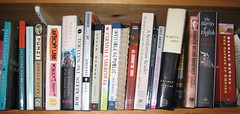
What Grant Writing Books are on Your Shelf?
This news brief caught my eye.
Chronicle-Telegram » Off the Beat 07/28/07: "From the desk of Mike Kobylka…
Lorain Safety Service Director Mike Kobylka never likes to judge a book by its cover, but sometimes he thinks he should.
Sitting on the floor of his office are two books, one on top of the other. The one on the bottom is called “The Only Grant Writing Book You’ll Ever Need” while the one on top is “The Complete Book of Grant Writing.”
He bought “The Complete Book of Grant Writing” first, but said he wishes he would have taken “the only book he’ll ever need” claim at face value.
“The other one was awful, but (“The Only Grant Writing Book You’ll Ever Need”) had it all,” he said.— Adam Wright"
What grant writing books are on your bookshelf? Which are the ones you turn to on a regular basis?
Wednesday, June 27, 2007
# 38: CDC Stats for Grant Writers
The Center for Disease Control has introduced VitalStats, a site that will let you create your own tables from the information they collect. I haven't checked how local the reporting options are, but they offer a QuickGuide to walk you through the how-to.
Their description:
"Welcome to VitalStats, a collection of vital statistics products including tables, data files, and reports that allow users to access and examine vital statistics and population data interactively.I find it interesting that they also provide a QuickGuide for calculating rates and percents. I could have used both the data and the guide when I wrote a grant last month that examined teen pregnancy figures from every conceivable direction.
Use our prebuilt tables and reports for quick access to statistics. Or, you can use the data files to create your own tables--choosing from over 100 variables. Using the data files takes a little more time but gives you access to more data. You can customize the tables, and create charts, graphs, and maps. You can even export the data for use offline or in another format. Please see the Getting Started Quick Guide Graphic of P D F for more information. "
Book mark this site for future use.
Tuesday, June 26, 2007
#37: Writing, Briefly
Paul Graham wrote one of the best essays on writing in March of 2005. I encourage you to read it. In fact, print it out, post it on your bulliten board, and read it every time you start a new writing project.
Writing, Briefly:Whether it's a grant application or a novel, Paul's advice applies.
(In the process of answering an email, I accidentally wrote a tiny essay about writing. I usually spend weeks on an essay. This one took 67 minutes—23 of writing, and 44 of rewriting.)"
Follow the link to Paul's site.
#36: Picture the Grant Reviewer
Always write for your audience, not your client. And in the grant writing business, your audience is your review panel. Who are they? Your agencies' peers. People who research and consult in the area the grant addresses.
I write to a specific individual I picture with applications stacked up around him, late at night, eyes blurring. But here's Scott Adams' (of Dilbert fame) take on peer review. It's a bit different than mine.
The Dilbert Blog: Peer Review: "Peer Review
Peer review in science is a good thing, in the sense that it works better than any other process you can think of. But how well does it work? Dilbert Blog reader Jeff points to this link about the limits of peer review.Have you been a reviewer? Defend -- err, tell us about yourself.
The article fits my preconceived notions quite well. Assuming scientists are human beings, it seems to me that most peer reviewers would fall into one of these categories:
1. Asshole
2. Biased egomaniac
3. Nice person who doesn’t want to make people feel bad
4. Too busy to put any quality thought into it
5. Person with low self-esteem who doesn’t want others to succeed in his or her field
6. Coward who doesn’t want to rock the boat
I suppose some scientists have plenty of free time, no biases, and would be happy to see colleagues succeed beyond their own careers. But seriously, how many of those scientists could there be? I don’t know any non-scientists who could fit that description."
Fake Grant Writer Admits Fraud
Here's a news item that caught my eye in the midst of my grant writing frenzy last month. Can you believe it?
Fake Grant Writer Admits Fraud: "TALLAHASSEE, FL – A Hillsborough County woman has been sentenced to five years in prison for committing organized fraud.
Karen Kiehl pled guilty to defrauding more than 60 victims in a grant acquisition scam that ran for approximately 13 months. She was prosecuted by the Attorney General’s Office of Statewide Prosecution. An investigation conducted by the Florida Department of Law Enforcement and the Hillsborough County Sheriff’s Office revealed that Kiehl, 50, falsely promoted herself as a grant writer. She claimed she could guarantee federal and state grants for anything from medical costs to home repair costs and charged approximately one percent of the requested grant amount for her grant writing services. More than 60 victims paid Kiehl approximately $195,000, but none of the grants were written and the victims received no money from Kiehl.
Kiehl was charged with one count of organized fraud, a first-degree felony. She pleaded guilty to the charge in April and was sentenced to five years in prison to be followed by 10 years of probation. She must also make restitution to her victims. 6-04-07"Photo by !Borghetti
Wednesday, June 20, 2007
#35: Speaking the Language of Grants
Kaylea Hascall at Educause Connect posted a piece recently on a grant writing course she attended. One of the things that caught her attention was the jargon. I try to avoid jargon so her list gave me pause.
How could anyone write a grant application without using most of these words? They're so integrated into RFPs and narratives that I assume everyone knows what they mean. And, of course, that's just what jargon is -- a word that has special meaning within a particular group.
So here, thanks to Kaylea, are some important terms that may be foreign to new grant writers.
"I noticed a number of terms came up again and again. Some of these are very familiar to the business world or the IT world, but they have a specific meaning in the context of dealing with funders.
capacity-building -- This is a particular category of grant, where the non-profit seeks funding which will expand their reach or make them more self-sustaining. One example of a capacity-building grant is obtaining funds for a development person who can raise money from other sources and move the organization toward being self-sustaining.Thanks, Kayla.
sustainability -- Once you get started, how will you continue this project or program? Will you be dependent on the funder for some time into the future? This is an important consideration for foundations in particular....
cost-sharing -- A popular term, if you can use it. Basically it means that someone else is putting up some of the money, and thus the foundation gets more bang for their buck.
dissemination -- How you will share the project with others. Will an article be published in the New York Times? Will you present results at conferences? Historically, this is of particular concern to agencies that fund basic research, but over time this is also more of a concern for foundations.
leverage -- Another popular term, if applicable. Will foundation money enable you to better use existing resources?
stewardship -- the process of taking care of a grant and its funder after the grant is made. Thank-you notes, progress reports, and invitations to view the results of the work are all appropriate. Getting a grant from a funder more than once is impossible without this.
#34: Does Grant Writing Require Much Revision?
I opened the final narrative just to check and found all my revisions laid out for the world to see. Yes, I revise and revise and revise. And I didn't know then what I know now.
Always, always, always accept all changes in your document before sending it out into the world.
You don't use the Reviewing Tool Bar? Well, start now. It only take a few seconds, but it makes your work present professionally and can potentially save you embarrassment and/or protect agency secrets.
In case you need to know how here are the steps --
Select View > Tool Bars > Reviewing to open the Reviewing Tool Bar.

Then drop down the Accept Changes menu that the arrow points to. Next select Accept All Changes in Document.

If you follow these steps no one will ever know that you were going to provide the service for half the price or that you changed the funders name when you recycled the leadership biographies.
I make this my final step before saving for the last time. You should, too.
Sunday, June 17, 2007
Oh, my! June is here.
I've just finished a major writing jag. One deadline after another. The phone ringing. Drafts moving back and forth across the ether. The clock ticking. Adrenalin pumping.
And suddenly it's quiet. Not a grant deadline in sight. What a nice way to spend the balance of June. Plenty of interesting work to address at a sane pace.
I have a long list of posts to polish for you. A client's and my own e-newsletter to publish. An annual report to finish up, and a search for private funding for some of my clients' dream projects.
My new summer office is almost ready. We've replaced the old screen house with a new screened gazebo. Glenn's added electricity and a ceiling fan. With a wireless internet connection, my laptop and a monitor, and a wireless phone I'm ready to spend the summer working outdoors.
Oh, I love summer.
Thursday, June 14, 2007
Grant Writers' Proofreading and Copy-editing Test
If you're one of those people for whom test-taking is another way to prove how smart you are, here's one for you. How strong are your proofreading skills?
Freelance Proofreading and Copy-editing - Proofreading test:
"The following passage contains several common errors of the type you are likely to come across in a set of proofs (though not as closely clustered as here, I hope). This test should not be taken too seriously, but since you have nowhere better to be at 9:15 on a Thursday morning than here, I hope that you'll find it fun, at least."Thanks to Visual Thesaurus for pointing me here. Yes, I took the test on a Thursday morning. I'm glad I have spell check, grammar resources, style guides, and good friends to edit my work.
How did you do?
Friday, March 16, 2007
#33: Eliminate the Dreadful 'his/her' from Your Grant Narrative
Don't you just hate to write sentences like "The most improved student will present a portfolio of his/her work?"
But, I'm a feminist. Gender neutrality matters. So, try out these techniques.
- Convert those sentences to the plural, if that will work
- Avoid the pronoun altogether -- "The most improved student will present a portfolio of work."
- Use the singular "their" -- "The most improved student will present a portfolio of their work."
Yes, generally singular nouns take singular pronouns. But as you aptly note, 'his/her' is awkward and using only 'his' skews the meaning of a sentence. Using 'their' as a singular, inclusive pronoun has historical precedent and promotes the meaning better than those choices.
This choice has historical legitimacy, is acceptable for all informal writing and — if used consistently — for formal writing as well (though some will raise their eyebrows).
Sources: Professional Training Company: Communication Strategies for Scientists and Engineers and The American Heritage Dictionary of the English Language, 3rd edition. NY:Houghton Mifflin Company, 1992
Photo by Henrik Ahlen
#32: Parent Engagement Strategies for Grant Writers
Grant writer, how will you engage the families of your young program participants?
This question, in one form or another, keeps popping up in grant applications these days. All the research shows kids do better when their parents participate in their world.
But, engaging parents challenges even the best programs. It's especially sticky for those designing programs for adolescents. Seems like the parents of adolescents just run out of energy.
And many at-risk kids wouldn't be 'at-risk' if their parents were involved.
I turn to the Harvard Family Research Project for up-to-date research on family engagement. You'll find a wealth of information, toolkits, publications, annotated bibliographies, and a monthly newsletter from FINE.
If you write grants to fund youth programs, this site deserves a place in your favorites. And do share it with the staff providing services to youth.
Welcome to FINE - Family Involvement Network of Educators - at the Harvard Family Research Project: "The Family Involvement Network of Educators (FINE) is a national network of over 5,000 people who are interested in promoting strong partnerships between children's educators, their families, and their communities."
Wednesday, March 14, 2007
# 31: Look at your grant narrative with squinty eyes
People tend to think of writers as having one job. But they really have two. I divvy it up this way: in my writing job I pour all my creativity and story-telling skills and wit down onto the page. Then "I" swivel completely around in my chair and return as a crusty, squinty-eyed editor wearing a little poker visor. At which point I look at the thing I just wrote, and harrumph, "Ok, what did that lunkhead Sinberg give me this time?"
Well, it's the same for grant writers. I get up and walk away. Until tomorrow, if possible. When I enter edit mode I'm a different person. Brutal.
Sometimes I have to trick myself. I save those sentences and paragraphs I'm in love with that just don't fit right. But, I paste them into a separate document. I tell myself I'll come back and use them later or elsewhere. I don't. I throw them away.
Nurture the crusty, old, squinty-eyed editor in you. Your writing will be stronger. Your wastebasket will be full.
Source: AWAI
Photo by Claude Covo-Farchi
Tuesday, March 13, 2007
My New Grant Writing Help Web Site
I'm in the pause between intense grants. Trying to take a deep breath. Clear the brain. Get some fresh air. Think about other things.
I finished an application to provide transition services for soon-to-graduate high school students with disabilities. I'm picking up speed on two new ones -- a mentoring grant and a community drop-in center/after-school program.
Do you use color in your grant applications? I haven't, but I'd like to. It could make the pages more readable if carefully applied. The problem rests with the unknown. Will the evaluator read it on-line and with color? or print it out in black and white, anyhow?
Photo by Chris Gierszewski
Sunday, February 11, 2007
#30: Can You Teach an Old Grant Writer New Tricks?
As a professional grant writer, I've evolved a system that works for me. But, I love finding new tools and new perspectives that will make my applications even more effective. That's what I found in The Complete Book of Grant Writing by Nancy Burke Smith & E. Gabriell Works.
Two things I especially liked -- the perspective of an experienced grant evaluator and the many useful templates. I've already incorporated the Team Review Rubric into my practice.
I'll write more about some of their tips in future posts. But for now--
This guide will stay in a prominent place on my reference shelf.
Tuesday, February 06, 2007
#29: Serial commas, grant writers, and proper punctuation
I thought the final comma was optional -- that the rule was either way, but be consistent. I plugged it in because I believe it facilitates clear communication.
Now I've learned that the only style guide that advocates leaving it out is the Associated Press Stylebook. The rule according to all other authorities requires that final comma.
We don't write newspaper articles. We write grant applications. So there! My instincts were right for a change. (Generally, I don't trust my grammar or punctuation. I'm forever looking things up.)
For a more authoritative discussion than this:
The Case of the Serial Comma--Solved!: "My original assertion stands, with minor qualifications: Except for journalists, all American authorities say to use the final serial comma: 'He went to the store to buy milk, butter, and eggs.'
The reason for the final serial comma is to prevent the last 2 items' being confused as a unit (butter-and-eggs)."
Friday, February 02, 2007
#28: How to Avoid Acronyms in Your Grant Applications
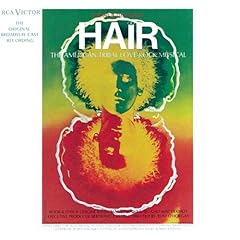
Remember that song from HAIR?
LBJ took the IRT down to 4th Street, USA. When he got there what did he see? The youth of America on LSD.I recently came across this Acronyms.pdf on the Good Grammar, Good Style website. The author, Helen Moody, scolds us for using acronyms. She points out (in a most entertaining fashion) that acronyms are writer-centric. And we need to serve the reader, not ourselves.
I'm guilty! I admit it. And, I promise to do better. No more writing out the phrase once, with the abbreviation in parentheses. After all, I want them to remember my client's name.
Moody's pdf covers the whys and where-fors of acronyms and offers some good work-arounds to help avoid them. It's a quick and entertaining read.
Good Grammar, Good Style (tm): "The Good Grammar, Good Style™ Pages"
Friday, January 26, 2007
#27: The Easy Way to Prepare Diagrams for Your Grant
Putting a diagram together, especially when the clock was ticking closer to my deadline, gave me the hee-bee-gee-bees. Then I learned the easy way.
Forget about WORD -- go straight to PowerPoint. Design your diagram there. You'll find you have much more control. The tools are plentiful and easy to master. The end product will look much more professional.
Once you're happy with it, just copy and paste it into your WORD document. Great diagram, no grief.
Want a little inspiration?
Elizabeth Li-Anna Qiuju Gaeta Holmes won 2nd prize (I would have given her first prize) in the essay contest my client, the NY Center for Interpersonal Development, sponsored for their Celebrate Diversity event.
It will only take you a minute to read. It will warm you for days.
Sunday, January 21, 2007
About This Blog

First, let me introduce myself. My name is Ruth Wahtera. I love my job, which is -- whatever I make it! In 2001, after years working in large organizations, I set out to be my own boss. I have no desire to build a huge company. I just want to use my talents to help people I enjoy make great things happen.
More often than not, that means that I'm helping people and organizations translate their dreams into language others will understand and support.
Strategic plans, business plans, grant applications, web sites, blogs.... I write a lot. I also facilitate conversations and planning sessions. I consult. I work on special projects. I serve as a sounding board.
And, I love to explore and test new tools and techniques for working efficiently and managing projects.
One day I started thinking about how my clients could use blogs. That made me think that I better start blogging myself. After all, there's nothing worse than a consultant preaching about something they've never experienced. So, I thought, hmmm -- grant writing tips.
Every non-profit, many individuals, every school, and some businesses submit grant applications. And, we're all struggling with the same issues. Some involve nuts and bolts. Some present ethical or philosophical. Some are pure resource needs -- where can I find statistics about the number of xyz's in my state?
So, this blog was born. It provides me with experience blogging. It helps me think about the process of writing good grants, and that helps me improve my craft. And, I can share what I've learned with others.
If you find value in what I offer, I hope you'll encourage me by posting comments and offering your own tips and resources. Knowing you've found something useful will keep me writing. And when you share something that works for you, you make me very happy.
I hope you'll subscribe by RSS or, if you prefer updates by email, by Feedblitz. You'll find the subscription information at the bottom of the sidebar. I also publish a periodic enewsletter about whatever I find interesting -- the epitome of arrogance. But you may find some of it interesting, too.
Monday, January 15, 2007
New Look
What I like best is the ability to label each post.
Wednesday, January 10, 2007
#26: Grant Writers, More White Space, Please!
Alison Snyder reminded scientists of some basic tenets of grant writing in a recent article in The Scientist. One of her points was that aesthetics count. In addition reminding them to follow directions about font size, margins, and spacing, she encouraged them to pay attention to how the page as a whole looks. Add space between paragraphs. Use headings and sub-headings.This point prompted the following great comment about white space.
Applicants generally do not appreciate the importance of [white space]. "White space" in a proposal allows a reviewer to annotate the document while reading, instead of jotting comments on a note pad, which can be missplaced prior to writing a formal critique. In addition, white space "lightens" the document in a reviewer-friendly way. Applicants should consider that their proposal may be read by a reviewer late at night when a baby is crying or on an airplane travelling to a meeting. The more reviewer-friendly, the better.
I try to put myself in the readers shoes, and I'm very conscious of white space from an aesthetic perspective. I want my proposal to be a pleasure to read when the reviewer pulls it out of the stack. But I have to admit, I never thought about making it easy for the reviewer to make notes directly on the document. Thanks for the insight, Dr. Trimble.
Saturday, December 30, 2006
#25 - 2006: The Year in Research from RWJF
Robert Wood Johnson Foundation has published their ten best 2006 research findings. These can be invaluable resources for grant writers if the projects you're seeking funds for fall into any of their categories. At their site, each links to a summary of the research and information about how to access the full study.
RWJF - Newsroom - Features - 2006: The Year in Research:
If you aren't familiar with RWJF, take some time to browse their site and sign up for their announcements for the topics relevant to your clients. They provide great information and solicit applications in the broadly defined healthcare arena.
- U.S. children and teens consume more daily calories than they need to support normal growth, physical activity and body function, leading to excess weight gain.
- New evidence shows the potential for Cash & Counseling, a consumer-direction model, to reduce dependence on nursing home admissions.
- Despite substantial investments by the tobacco industry in smoking prevention, their ads are shown to have no effect at best and may actually increase the likelihood of teen smoking.
- One economist is convinced that with a reinsurance program, the federal government can help lower the number of uninsured by one-third.
- Substance abuse treatment may be a wise investment when one considers the decrease in costs to society and the increase in productivity that is associated with such treatment.
- The many drawbacks of the medical tort system are stimulating interest in health courts as a more efficient and cost-effective alternative to the current medical malpractice claims system.
- Translating effective programs into practice is always a challenge; two Active for Life programs have proven successful in encouraging physical activity in older adults.
- While some disparities in care exist, due to characteristics such as race and insurance status, they are small compared to the gap in care between what everyone should get and what they are receiving.
- The cumulative effect of mental health disorders, substance use and domestic violence increases a child's risk of social and emotional behavior problems.
- An examination of chronic care management among the elderly uncovers waste, inequality and inefficiencies and highlights areas for improvement.
Sunday, December 17, 2006
#24: DOJ Reports on Crime in Schools - Stats for Grant Writers
Bureau of Justice Statistics Indicators of School Crime and Safety, 2006
Indicators of School Crime and Safety, 2006 Presents data on crime and safety at school from the perspectives of students, teachers, principals, and the general population. A joint effort by the Bureau of Justice Statistics and the National Center for Education Statistics, this annual report examines crime occurring in school as well as on the way to and from school. It also provides the most current detailed statistical information on the nature of crime in schools, school environments, and responses to violence and crime at school. Data are drawn from several federally funded collections including the National Crime Victimization Survey, Youth Risk Behavior Survey, School Survey on Crime and Safety, and School and Staffing Survey.
Monday, December 04, 2006
#23: When Grant Writing, Use Those Easy Pieces Wisely
Today's Non-Profit Times e-newsletter had a brief article on grant writing. Their advice --Grants ...Start the process with the easy sections You've done the research, found grants to apply for, assessed your organization's ability to complete a competitive proposal. Now it's time to actually start writing your grant proposal. What's the first thing you should do? Don't panic,according to Alexis Carter-Black, author of "Getting Grants: The Complete Manual of Proposal Development and Administration.
...She suggests breaking up the proposal into smaller sections and writing one section at a time, starting with the one you find easiest -- it doesn't even have to be in order until you send it in.
It's good advice to break the proposal into smaller sections. Then, find the strategy that works best for you.
Rather than do all the easy stuff first, I like to spread it throughout the writing process. I write an easy section whenever I need a break. I may need to let a more challenging section percolate a bit, or just have a hard time getting started one morning.
Whether you do the easy stuff first, spread it around, save it for last, do an easy piece every morning, or write them on those nights you have insomnia, think through what works best for you. The easy pieces are gifts. Treasure them and plan accordingly.
Photo by dcJohn, CC some rights reserved
Tuesday, November 21, 2006
KISS Me Again, Grant Writer!

I'm not giving this post a number because it's really a repeat of #14: Apply the KISS Principle to Grant Writing. But, I came accross this quote tonight and I just couldn't resist using it to reinforce one of the most important things any successful grant writer must learn.
"As our friend and author Andy Goodman spoofed:
If Nike were a nonprofit, its 'Just do it' campaign would be 'While an occasional disinclination to exercise is exhibited by all age cohorts, the likelihood of positive health outcomes makes even mildly strenuous physical activity all the more imperative.'"Don't fall into that trap. Just say what you have to say. Say it clearly. Say it simply. Say it passionately. But, just say it.
By the way, I found the quote in an article in the Stanford Social Innovation Review. The author was discussing the importance of researching your target audience before investing in non-profit marketing and fundraising communications.
It's good stuff, if you want to take a look. But, I won't discuss it here.
Stanford Social Innovation Review : Articles : Research Rules (December 1, 2005):
Photo by Paulo Sacramento, Creative Commons - some rights reserved
Monday, November 20, 2006
#22 - The FBI - a Grant Writer's Friend

Need local crime stats? Start by contacting your local police department. They may post stats on their website, or you may have to ask for them. But they'll give them to you, often by neighborhood.
But if time is short, or you want city-wide stats, the FBI is your best friend. Local law enforcement must report periodically, and all that data is available on line at the FBI Crime in the United States site.
Note the link to Table 8 - How many crimes were reported in my city in 2005? in the lower left corner next to Quick Finds. It takes you to a table where you can find the stats for your city.
Crime in the United States 2005: "About Crime In the United States"
Photo thanks to Malingering - Creative Commons, some rights reserved
Monday, November 13, 2006
#21: Grant Writing Guidance From the Horse's Mouth

HHS' SAMHSA issues RFP after RFP. Seems like it should be easy to capture some of their funding, doesn't it? But the competition is fierce.
I'd written more than one SAMHSA grant application before I discovered this manual. What more could a grant writer want than the funder providing the skinny on just what matters to them? Here it is, straight from the horse's mouth.
You'll also find links to grant opportunities, statistics, news... a site worth visiting periodically if you provide services or write grants for the substance abuse, mental health, or prevention fields.
Developing Competitive SAMHSA Grant Applications - Table of contents: "Developing Competitive SAMHSA Grant Applications Participants Manual"
Where did that expression "straight from the horse's mouth" come from. by the way???
Sunday, November 12, 2006
# 20: Grant Resources from the White House

The White House has pushed faith-based initiatives. Part of that push includes a site loaded with resources designed to help faith-based and small community-based organizations find money to support the White House goals. It's worth some time, some rainy afternoon when you need a break.
And, you never know what tips you'll find. For example, it never occurred to me to ask for copies of winning applications through Freedom of Information until I read it here.
Faith-Based and Community Initiatives: Grant Opportunities: "White House Office of Faith-Based and Community Initiatives --Federal Funds for Organizations That Help Those in Need"
Friday, October 06, 2006
# 19: Know your funder - Advice from Donor Power Blog
"Put it this way: Your donors are giving to you because of what that giving says about them -- to themselves or to others.
They aren't giving because your programs are so brilliant.
They aren't giving because you're so smart (or strategic, or any other great attribute).
They aren't giving because of your long history or superior achievement."
When you write a grant application you tell the funder 'you'll be happy to have your money and your name associated with this program and this agency. We will represent you well.'
Pay attention to what they want their funding to say about them -- for example: Do they want to be seen as a funder for projects staffed by highly professional, credentialed staff or are they self-help or peer oriented? Are they interested in agencies with a track record of sucesses or in nurturing start-ups. Do they like risk-taking and funding innovations or do they want projects based on model programs? Are they consumer or community-oriented or research-based?
You can tell a lot from the RFP itself, but I also like to see who they've previously funded, and how they describe those projects. What image do they project in their newsletters and conferences? Anything I can learn about the face they present to the world will inform my narrative strategy.
Jeff says "So ask yourself: What about our brand feeds the unique aspirations of our donors? What is it about giving to you that makes them feel proud or happy or cool or validated?"
Read Jeff's post. In fact, read his blog regularly. I do. As a grant writer, it will broaden your perspective. As a non-profit marketer and fundraiser, you'll find something relevant in every post.
Wednesday, October 04, 2006
#18: How Can You Prove Your Outcomes Are Worth the Money?

Oh, finally someone has said something sensible about outcome measurement. What do they say? You can't prove it -- and, it can be counter productive to try.
Stanford Social Innovation Review : Articles : Drowning in Data (August 30, 2006): "The only surefire way to show that a program is helping people more than they could have helped themselves is to conduct expensive and lengthy studies involving control groups. Because so many people underestimate the difficulty and cost of demonstrating impact, nonprofits often collect reams of data that are not only useless, but also misleading. As a result, evaluation is failing to help make the social sector more effective."Yes, the team needs to have a logic model and identify goals. But, my money is on program improvement, not long term outcomes.
Read this article. Pass it along. It's important!
Thursday, September 21, 2006
#17: OJJDP Provides Updated Juvenile Statistics
"Juvenile Offenders and Victims: 2006 National Report"
The report offers a wealth of statistics on juveniles. The first chapter sets the stage with a good overview of all children and adolescents including state comparisons.
You can use it to put together a good baseline to compare with your target population.
Sunday, September 17, 2006
# 16: Does Anyone Around Here Read?

Long ago, I gave up expecting grant prep team members to read the RFP. Yes, some conscientious individuals will. But most won't. They're busy running programs, as they should be. Grant applications get sandwiched in. Why be disappointed or frustrated with them? Compensate.
I start the grant writing process with a 1 or 2 page (max) summary which includes the funders goals and requirements followed by bulleted questions for the team to consider, or the program content already under discussion. I aim to make the document one someone can scan in less than five minutes.
It's worth the effort. It helps fix the funder's agenda in my mind. It guarantees we have easily referenced requirements in front of everyone as we plan. And it serves as the basis of the background material we provide to people who agree to provide letters of support. (More about those letters another time.)
Does Anyone Around Here Read? Not the RFPs! But why worry?
# 15: 'To Be or Not ...' - How to Avoid 'To Be'

I use "control + F" to help me find BAD things in my writing, and eliminate them. For example, I go on a search and destroy mission for all forms of the verb "to be." To do this, I hit "control + F" and type the word "is" in the handy-dandy little box. Then I hit, "find next." The software then takes me methodically through my story or article, highlighting every time I've used the word "is." One by one, I then try to replace each "is" with a more interesting verb. And then, if I'm feeling energetic, I do exactly the same thing with: were, was, are, will be.If you're interested in subscribing to her newsletter, you'll find it here. She sends short, useful tips wrapped in good stories.
# 14: Apply the KISS Principle to Grant Writing

It's a great temptation to reach for long, scholarly words to impress grant evaluators. Anything to prove our clients are smart and worthy. But, STOP!
Daniel Oppenheimer, at Princeton, says,
"Anything that makes a text hard to read and understand, such as unnecessarily long words or complicated fonts, will lower readers' evaluations of the text and its author."His research, Consequences of Erudite Vernacular Utilized Irrespective of Necessity: Problems with Using Long Words Needlessly, found people rated the intelligentce of authors who wrote in simpler language, using an easy to read font, as higher than those inserting unnecessary complexity. The study was published in the Journal of Applied Cognitive Psychology 2005
His conclusion-
"One thing seems certain: write as simply and plainly as possible and it's more likely you'll be thought of as intelligent."So, colleagues, Keep It Simple, Smarty!
'ScienceDaily: The Secret Of Impressive Writing? Keep It Plain And Simple:
Thursday, August 17, 2006
#13 Neighborhood level census data for grant applications
This little census tutorial highlighted a great tool - enter the address, then choose the level report you want - census tract, city, county, etc. You can map your choices, too. Especially helpful when working at the census tract level.
FASTEN Network
Neighborhood Data
Want to explore some more? You can also retrieve a lot of information about your city or even your neighborhood from the Census web page. To do this go to http://www.census.gov/main/www/cen2000.html and find the picture of the street sign followed by the words "Enter a street address to find Census 2000 data." (It's in the section between the red lines near the top of the page.) Click on the highlighted words "street address."
Wednesday, August 16, 2006
#12 Grant Writers Need Fresh Statistics
I hate using old statistics when I'm making a case for funding. Makes me feel like we haven't done our homework. So, I'm always on the lookout for good sources.
The Annie E. Casey Foundation publishes an annual database - Kids Count. This year they've added some great bells and whistles. Take a look. And order a hard copy of the book -- it's free.
KIDS COUNT State-Level Data Online
Data from the Annie E. Casey Foundation’s 2006 KIDS COUNT Data Book are now available in our easy-to-use, powerful online database, "State Level Data Online", that allows you to generate custom graphs, maps, ranked lists, and state-by-state profiles; or, download the entire data set as delimited text files.
Wednesday, July 26, 2006
#11: Grant Writing and Client Feedback
Working with short deadlines forces me to share drafts sooner than I'd like. My client often sees a draft that looks nothing like the finished product. But I need feedback on the content. Are the facts right? Am I emphasizing the right points in the evidence?
Seth Godin's blog entry about giving good feedback is useful in thinking through how to ask your client for feedback on that early draft.
Seth's Blog
In the interest of promoting your career, making your day at work more fun, improving the work life of your colleagues, and generally making my life a whole lot better, I'd like to give you some feedback on giving feedback. As usual, the ideas are simple--it's doing them that's tricky.
Wednesday, July 19, 2006
#10 Saving Time Using Two Screens
Glenn bugged me for months. "Ruth, you really should add a second monitor." I thought he was being silly and I resisted. But grant writing involves pulling together information from multiple documents and so much cutting and pasting.
Having a second screen makes it possible to keep my draft on the main screen and my source documents and the RFP on the second. I usually keep my email open on the second screen, as well, so I can see the answers to those time-critical questions as they come in.
Technically it's pretty simple, especially if you're using a laptop. Just connect the monitor and change a few settings. Voila! your desktop stretches across two screens.
I really recommend it. Your IT guru can help you set it up, if you're not adventurous. Save yourself time, stay more organized, keep what's important in front of you.
Thanks for pushing me, Glenn.
Friday, July 07, 2006
#9 Google Government Search, Now With State Filtering
One of the most useful blogs I follow is ResearchBuzz. She keeps track of resources and tools for researching on the web.
Now she's gone a step further. She's improving the tools out there. I was delighted when Google introduced Government Search. But the addition of state filtering makes it perfect. WOW!
And thanks, ResearchBuzz.
Friday, June 09, 2006
Any advice?
But I wasn't very productive this time. I've had a tough time refocusing, too.
Any recommendations for how to be productive on the road?
Friday, May 19, 2006
#8 Use Strong Language
Which is stronger?
In our youth work we try to draw upon proven
models...
In our youth work we draw up proven
models...Of course, it's the second one.
But this week I reviewed a grant application written in house for a client. It was rife with wishy-washy words that communicated a lack of confidence in their ability to successfully implement their proposal.
I didn't have time to write the application for them but agreed to review what the
staff wrote and offer some suggestions. I've worked with them long enough to know they are extremely competent and manage several effective youth programs.So why the weak language?
Humility. They thought they should be humble. It's a problem that plagues us all when we begin marketing our services to potential clients or funders. We're shy about saying we're good at what we do.
Unfortunately, it weakens the proposal.
You have to go for strength. Take out the passive tense. Eliminate the we try's and we believe's and we want to's -- go for strength, action, confidence.
Prove you're worthy of the money you're asking for.